Kitchen Secrets with Our Cuban Chef – Natilla Cubana
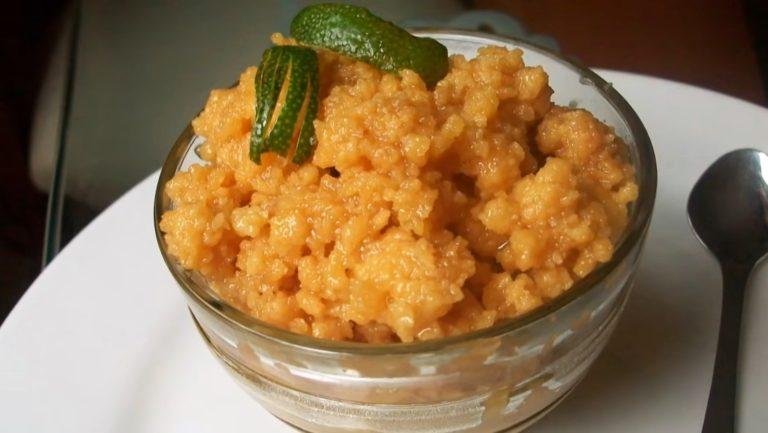
Natilla is a soft egg custard you eat cold, with a spoon, out of a small cup. Milk, egg yolks, sugar, a little cornstarch, a cinnamon stick and a strip of lime peel. That is the whole list.
It is not flan. Flan is baked in a water bath and turned out of its mould, firm enough to hold a clean edge. Natilla never leaves the cup. It sets somewhere between thick cream and pudding, and the top gets a dusting of ground cinnamon right before it goes to the table.
The reason to make it at home is that it costs almost nothing and takes about thirty-five minutes of real work. The reason people are nervous about it is the same reason any custard makes people nervous: eggs and heat. Once you understand what the pan is doing, it stops being a gamble.
From Spanish natillas to a Cuban cup
Natilla reached Cuba the way most of the island’s older sweets did, with Spain. The Spanish version is a plain thing: milk warmed with a cinnamon stick and a strip of lemon peel, thickened with egg yolks and sugar and nothing else, left to go cold with a Maria biscuit set on top. Every part of that survives in the Cuban cup, including the biscuit and the small serving.
What changed on the island was the thickener. Cuban natilla nearly always carries cornstarch alongside the yolks, and plenty of home cooks reach for evaporated or condensed milk instead of fresh. Both choices make sense in a hot climate and a kitchen that could not count on refrigeration. Cornstarch sets firmly and forgives a cook whose pan gets away from them, and tinned milk waited in the cupboard until it was needed. The result has more body than its Spanish parent and a little less egg in the flavour.
It settled in as an everyday dessert rather than a special one, in the same rotation as arroz con leche. Chocolate versions are common: the same base with cocoa stirred through, sometimes poured in layers with the plain custard so the cup shows two colours. There is no single fixed recipe. Some families use lemon peel, some lime, some add a strip of orange. Some use whole eggs, though most use yolks alone, because the whites set firm and leave the texture rubbery.
Ingredients
- 4 cups (1 litre) whole milk, divided into 3 1/2 cups and 1/2 cup
- 6 large egg yolks
- 3/4 cup (150 g) granulated sugar
- 1/3 cup (45 g) cornstarch
- 1 cinnamon stick
- 1 wide strip of lime peel, no white pith
- 1/4 teaspoon fine salt
- 1 teaspoon vanilla extract
- 2 tablespoons unsalted butter
- Ground cinnamon, for dusting
How to make natilla cubana
- Pour 3 1/2 cups of the milk into a heavy saucepan. Add the cinnamon stick, the strip of lime peel and the salt. Set it over medium heat and bring it to the point where steam rises and small bubbles ring the edge, about 6 to 8 minutes. Do not let it boil. Take the pan off the heat, cover it and leave the milk to steep for 10 minutes.
- In a bowl, whisk the cornstarch into the remaining 1/2 cup of cold milk until there is not a single lump. Add the egg yolks and the sugar and whisk for about a minute, until the mixture is pale and falls off the whisk in a smooth ribbon.
- Lift out the cinnamon stick and the lime peel. Ladle about a cup of the hot milk into the yolks in a thin stream, whisking the whole time, then add a second cup the same way. The bowl should feel warm, not hot.
- Pour the tempered yolks back into the saucepan with the rest of the milk and set it over medium-low heat. Stir constantly with a silicone spatula, moving in a figure eight and scraping the corners of the pan, where the custard catches first.
- Keep stirring for 8 to 10 minutes. The custard stays thin for most of that time, then thickens over about thirty seconds. Let it reach the point where one or two slow bubbles break the surface, then cook one minute longer to take the raw taste out of the cornstarch.
- Test it: drag a finger across the back of the coated spatula. If the line holds and the edges do not run back together, it is ready. Pull the pan off the heat at once.
- Stir in the butter and the vanilla and keep stirring until the butter has melted and the custard looks glossy.
- Pour the custard through a fine sieve into a jug, which catches any egg that set, then divide it between six small cups or ramekins.
- Press plastic wrap directly onto the surface if you do not want a skin, or leave the cups uncovered if you do. Cool for 20 minutes on the counter, then refrigerate at least 2 hours. Dust with ground cinnamon just before serving.
Chef’s notes
- Heat is the whole game. Medium-low and constant stirring, no shortcuts. If you look into the pan and see fine specks, the yolks have caught: take it off the heat immediately, press it through the sieve and then run a stick blender through it for ten seconds. It comes back almost every time.
- Undercooked starch tastes chalky. Pulling the pan off the second it thickens leaves a floury edge on the flavour, and the custard slackens overnight in the fridge. That extra minute at a slow bubble fixes both problems at once.
- Do not boil it hard. Cornstarch held at a rolling boil breaks down, and a custard that looked thick in the pan will pour like milk once it is cold. A couple of lazy bubbles is the ceiling.
- Dust the cinnamon last. Cinnamon added before chilling pulls moisture out of the surface, goes dark and damp and streaks when you spoon into it. Do it as the cups leave the fridge.
How to serve it
Serve it cold and serve it small. Six cups from a litre of milk sounds stingy until you eat one; it is rich, and a portion the size of a coffee cup is right after a full plate. Tuck a Maria biscuit against the side or crumble one over the top. If you like the skin that forms on cooling custard, leave the cups uncovered in the fridge and it will build on its own. Some people think that is the best part of the dessert and others strain it off, so make the call in your own kitchen.
Natilla belongs after a heavy plate, roast pork with black beans and a mound of rice, where anything baked or fried would be too much. Coffee is the natural partner: the cinnamon on top and a small, strong colada pull in the same direction. Covered and chilled, it keeps three days. Do not freeze it. The cornstarch weeps as it thaws and the texture never recovers.
If you would rather we made dessert
Some nights you want the custard and not the saucepan. Our dessert list runs to flan and pastelitos, both of which you can add to a pickup order along with the rest of the menu. We are at 5555 S 78th St in Tampa, open from five in the morning on weekdays and a little later at the weekend, and the coffee is on from the first minute.