The Café con Leche That Ran Ybor City’s Cigar Factories
Ybor City ran on two things that came off the boat from Havana: tobacco and coffee. The tobacco paid for the neighborhood. The coffee is what got the neighborhood through the morning.
If you drink café con leche in Tampa, you are at the end of a chain that starts in a cigar factory in the 1880s. Here is how it got here.
A town built on Cuban leaf
Vicente Martínez Ybor was a Spaniard who made his money manufacturing cigars in Havana and left in 1869, during the Ten Years’ War, to set up again in Key West. Key West gave him fires, strikes and nowhere to expand. In 1885 he bought roughly forty acres of scrub northeast of Tampa, then a town of a couple thousand people, with the local board of trade covering part of the price. He cut streets into it, built brick factories with long banks of windows for the light, and put up hundreds of small wooden houses to rent to his own workers.
The first cigar came out of Ybor City in April 1886, from the factory of Sánchez y Haya. Ignacio Haya opened first; Ybor’s own operation was the larger one. By the 1920s Tampa had well over a hundred factories and a nickname that stuck: Cigar City. Production peaked in 1929 at more than half a billion cigars in one year, all of them rolled by hand.
The people doing the rolling were Cuban, Spanish and Italian: Cubans both white and Black, Asturians and Galicians from northern Spain, and Sicilians, a large share of them from a single hill town, Santo Stefano Quisquina. They built their own mutual aid societies — El Centro Español in 1891, the Círculo Cubano in 1899, La Unión Martí-Maceo for Afro-Cubans in 1900, El Centro Asturiano in 1902 — which sold members prepaid medical care long before the country had a name for it. Every one of those clubs had a cantina, and every cantina had coffee going.
The coffee round
The rolling floor was called the galera. Work was piecework: you were paid by the cigar, so you sat at your bench and kept your hands moving. Nobody walked out for a coffee break. The coffee came to the bench.
The cafetero worked the aisles mid-morning and again mid-afternoon, carrying a tall metal can of coffee, a second of scalded milk, and a rack of small cups. Some factories had a stand by the door; elsewhere the vendor came from a corner café, ran the same route daily, kept a tab in his head and settled with the rollers on payday. A cup cost a few cents, and each drinker set the ratio.
Coffee came with bread. La Segunda Central Bakery opened on 15th Street in 1915 and is still there, still laying a palmetto frond down the length of each loaf so the crust splits along it in the oven. Delivery boys ran the routes before dawn and left the loaves, close to three feet long, speared on a nail beside the front door. Cut a section, split it, butter it, press it flat on a hot plancha, and dip it. That is Cuban toast, and it was breakfast for most of the neighborhood before the factory whistle.
Roasting stayed local. Naviera Coffee Mills has been roasting in Ybor City since 1921, Spanish-style dark roast, ground fine and brewed strong enough that it needs the milk.
The man on the platform
In the middle of the galera stood a chair on a raised platform, la tribuna. From it, six days a week, the lector read out loud to hundreds of people who could not lift their eyes from their hands.
The practice began in Havana in 1865, at the El Fígaro factory, where the worker and poet Saturnino Martínez had founded a paper called La Aurora and argued that if the men could not read at their benches, someone should read to them. Spanish colonial authorities banned factory reading within about a year, on the correct suspicion that it was making the workforce political. It survived anyway, and it crossed to Key West and then to Tampa in the luggage of exiles.
The lector was not on the company payroll. The workers chose him by vote and paid him themselves out of a weekly collection taken up at the benches, which is exactly why the owners could not decide what he read. He was frequently the best-paid person in the room. Mornings were newspapers: Spanish, Cuban, local, and the labor press. Afternoons were novels, read in installments over weeks, by Cervantes, Dumas, Hugo, Zola, Pérez Galdós and Tolstoy. A good lector did the voices, reached the far wall without amplification, and finished a shift with nothing left in his throat. Applause was not clapping. It was chavetas, the crescent-shaped rolling knives, rapped hard on wooden benches.
You will hear that the Montecristo cigar was named for the novel the readers made famous. That is the brand’s own account, and it rests on trade memory rather than any document from the period, so treat it as a story. The effect of the reading is not in dispute. People who had never spent a day in a classroom argued about Zola on the walk home. José Martí made repeated trips to Tampa between 1891 and 1895 and did much of his organizing on those factory floors, speaking from the reader’s platform. Cigar workers funded a serious share of the Cuban independence movement out of their own wages, a day’s pay at a time.
The reader who started a newspaper
Victoriano Manteiga read in Tampa factories and, in 1922, founded La Gaceta, a Spanish-language weekly in Ybor City. His family still publishes it, now in English, Spanish and Italian, which makes it the only trilingual newspaper in the country. The habit of reading the news aloud to the neighborhood did not end; it changed format.
November 1931
Owners had blamed the readers for every strike since the 1890s, and Tampa had plenty: 1899, 1901, the violent walkout of 1910 in which two Italian immigrants were taken from custody and lynched, and a ten-month strike in 1920 that emptied the factories and the savings accounts both.
Then came 1931. The Depression was on, cigar-making machines were arriving, and that fall the manufacturers announced that the lectores were finished. The workers struck over it. Citizens’ committees of local businessmen, operating alongside the police, broke the strike: leaders were seized, beaten, in some cases run out of the county. Within weeks it was over. The platforms were pulled out of the galeras and broken up. Where anything replaced them it was a radio wired to loudspeakers, and the owners picked the station.
The reading stopped. The coffee round did not. The cafetero kept walking the aisles through the layoffs, the machines, and the slow collapse of hand-rolled cigars into a specialty trade.
What is still standing
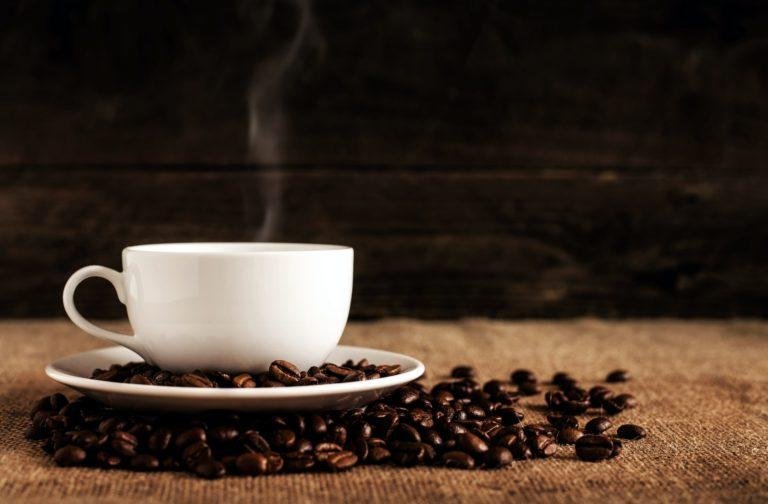
The factory buildings are lofts, offices and breweries now. The Ybor City Museum State Park occupies the old Ferlita Bakery on 9th Avenue, and La Segunda still ships bread across the state. The most durable survivor is the drink. Café con leche in Tampa is still built the way the cafetero built it: dark roast pulled short, milk scalded rather than foamed, sugar handled first. It outlived the industry that created the demand for it.
Chef’s notes
Three ingredients, and the whole thing turns on the order you combine them.
- Sugar goes in before the milk. Put it in the cup, pull the first few drops of espresso onto it, and beat it with a spoon until it goes pale and thick. That paste is the espumita. Sugar stirred into finished coffee is not the same drink.
- Scald the milk, do not foam it. Heat it until it steams and a skin starts at the edge, then pour. Café con leche should be smooth, not aerated.
- Roughly one part coffee to three or four parts milk. More milk than a latte, and hot enough that you wait a minute before the first sip.
- Set your own sugar. Ask for it sin azúcar and take the sugar on the side if you want to control it.
- Ask for the bread cut for dipping. Buttered, pressed, split lengthwise, then cut short enough to fit the cup. The bread is supposed to get wet.
A morning cup is a small thing to hang a history on, until you remember what it was attached to: long shifts, a novel read aloud in installments over a month, and a fight over who decided what workers heard while they rolled. We are a few miles southeast of the old factory district and we open at 5am on weekdays. Come in early for a cup and a plate of toast, or look through the rest of the menu and order pickup for later.