Cuban vs Puerto Rican vs Dominican Food: What Sets Each One Apart
Three islands, one sea, and more or less the same pantry: pork, rice, beans, plantains, garlic, root vegetables. From the outside, the food of Cuba, Puerto Rico and the Dominican Republic can look like one cuisine wearing three flags. It is not. The differences are small at the shopping-list level and large on the plate.
Any honest look at Cuban vs Puerto Rican vs Dominican food starts at the bottom of the pot, moves to the beans, and ends with what happens to a green plantain. We cook Cuban here. Take the Cuban notes as the ones we know from the stove and the other two as what we have learned from cooks who make them.
Sofrito: same idea, three different jars
All three kitchens start most dishes with an aromatic base. What goes into it is where they separate.
Cuba
Cuban sofrito is short. Olive oil or lard, onion, green bell pepper, a lot of garlic, then ground cumin, dried oregano and bay leaf. Tomato paste or sauce joins it for stews like ropa vieja and picadillo, and many cooks finish with a splash of dry white wine or vinegar. It is cooked, not blended raw: the vegetables go into the pan and soften before anything else arrives. Heat is almost never part of it.
Puerto Rico
Puerto Rican sofrito is usually blended raw and stored in the freezer, often frozen in cubes. Two ingredients define it. Culantro, called recao, is a long saw-edged leaf that tastes like cilantro turned up several notches. Ají dulce are small wrinkled sweet peppers, the same species as the habanero with none of the burn. Add onion, garlic, cilantro and bell pepper. When the blend is all green, cooks often call it recaíto. Color and salt come from a second layer: achiote bloomed in oil, and alcaparrado, the jar of olives, capers and pimiento that ends up in half the island’s stews.
Dominican Republic
Dominican sofrito, which plenty of households simply call sazón, is also a wet blend kept in a jar in the refrigerator, but it leans sour and herbal. Cubanelle pepper, onion, garlic, cilantro, dried oregano, then vinegar or agrio de naranja, the bottled bitter orange juice Dominican cooks keep on hand for marinades. A spoonful goes on the meat before it ever reaches the pot.
Black, pink, red
Bean color is the fastest way to place a plate.
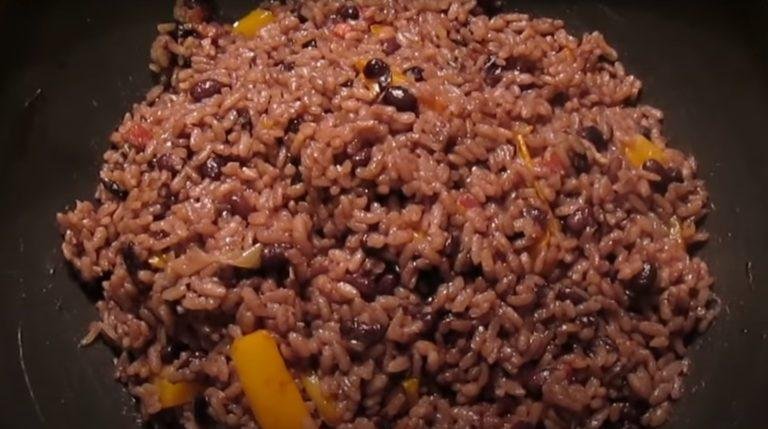
Cuba leans black. Potaje de frijoles negros is a soupy pot seasoned with cumin, oregano, bay leaf and green pepper, usually finished with vinegar and a pinch of sugar to round the edge. Cooked together with rice it becomes moros y cristianos. Congrí is the eastern Cuban name, and in Oriente it was traditionally built on red beans rather than black. That is why the two words get swapped today, and why people still argue about it. Our black beans follow the Cuban pot.
Puerto Rico leans pink. Habichuelas rosadas guisadas are pink beans stewed with sofrito, tomato sauce, chunks of calabaza that melt and thicken the liquid, potato and olives. They are ladled over white rice, not cooked into it. The rice dish that carries the flag is arroz con gandules: pigeon peas, sofrito, achiote and pork, served next to pernil at Christmas.
The Dominican Republic leans red. Habichuelas rojas guisadas use kidney beans, often with puréed calabaza for body, oregano and a little sugar. They go over white rice as one third of La Bandera: rice, beans, a stewed meat and a small salad, the everyday midday plate named after the flag. Our red beans are cooked the Cuban way, not the Dominican one, but they are the closest thing on our menu if red is what you grew up eating.
Fufú, mangú, mofongo
All three islands mash green plantain. The technique arrived with enslaved West and Central Africans, and the Cuban name still carries the Akan word fufu. What changed is what happens to the plantain first.
Cuban fufú de plátano is boiled, then mashed with garlic, oil or lard, and enough broth to keep it loose. Some cooks fold in bacon or chicharrón. It is soft, garlic-heavy, and served as a side.
Dominican mangú is also boiled, then mashed with some of the cooking water and butter or oil and kept smooth. What sets it apart is the top: red onion cooked down in vinegar. At breakfast it comes with los tres golpes, meaning fried salami, fried cheese and a fried egg.
Puerto Rican mofongo is the outlier. The plantain is fried first, then pounded in a wooden pilón with garlic, salt, olive oil and chicharrón. Frying makes it drier, denser and nuttier. It is usually shaped into a dome and served as a main with broth, shrimp or stewed meat. Trifongo adds sweet plantain and yuca to the same pilón. Where the word mofongo comes from is not settled. Several African origins get proposed and none is proven.
Citrus-forward against oregano-forward
Reduce each kitchen to one habit and this is what is left.
Cuban cooking is citrus-forward. Mojo is sour orange juice, crushed garlic, salt and oregano, with hot oil poured over the garlic. It marinates the pork for lechón asado and dresses boiled yuca. Bistec de palomilla arrives under raw onion and lime. Cumin does more work in a Cuban kitchen than in the other two.
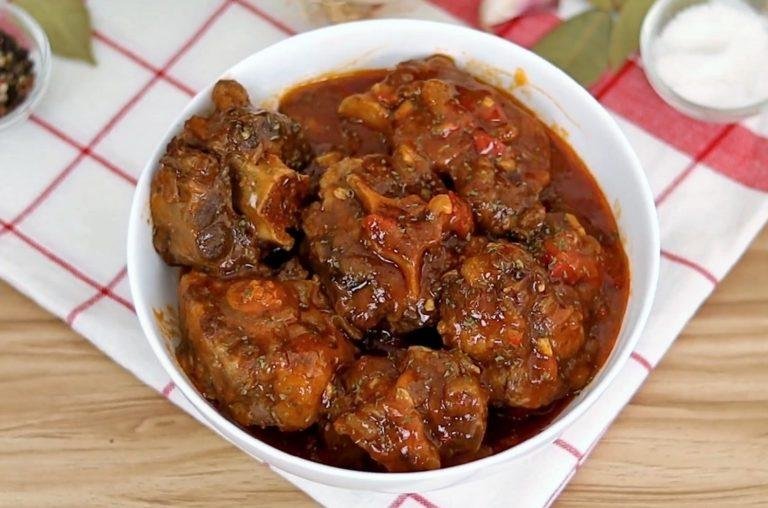
Puerto Rican and Dominican cooking are both oregano-forward, in different ways. Puerto Rican adobo, built on garlic, oregano, salt and pepper, goes on meat before it cooks. Many cooks reach for oregano brujo, a thick fuzzy broad leaf that is a different plant from Mediterranean oregano and much stronger. Dominican cooking uses dried oregano heavily and pairs it with vinegar and bitter orange. Chivo guisado, the stewed goat of the northwest, is mostly oregano, citrus and time. Cooks around Monte Cristi say the goats browse on wild oregano and that you can taste it.
None of the three is chili-hot. Puerto Rico puts pique, a bottle of vinegar and hot peppers, on the table so you can add it yourself. Dominican tables get something similar. Cuban tables get a lime wedge.
How the plate gets built
Cuban: a protein, white rice or moros, a starch such as tostones, maduros or yuca con mojo, and salad only if you ask for it. Puerto Rican: rice is often the center of the plate rather than the support, and fried snacks are a category of their own, from alcapurrias to bacalaítos to pastelillos. Dominican: La Bandera at midday, sancocho when people gather, and locrio when rice and meat cook in one pot together.
Even the crust at the bottom of the rice pot gets three names. Pegao in Puerto Rico, concón in the Dominican Republic, raspa in Cuba. All three are fought over at the table.
What the three actually share
Spanish colonial technique, African method, Taíno ingredients such as yuca and ají, and later arrivals from the Canary Islands, China, Lebanon and Haiti. Fried pork in some form. Flan at the end. Strong coffee in small cups. Plantain twice over, green and ripe. And the habit of building flavor at the start of the cooking, not the end.
Tampa adds a footnote of its own. The Cuban sandwich as this city makes it includes Genoa salami, a layer Miami leaves out. It traces back to the cafés and cigar factories of Ybor City, where Cuban, Spanish and Italian workers ate side by side. In 2012 the Tampa City Council named it the signature sandwich of the city.
Chef’s notes
- If you grew up on habichuelas guisadas and you order Cuban black beans, expect cumin and bay leaf instead of tomato sauce and calabaza. Thinner, darker, less sweet.
- Ask how the plantain mash was made before you order it. Boiled means fufú or mangú, soft and loose. Fried and pounded means mofongo, dense enough to hold a dome.
- Sour orange is not orange juice. If a recipe calls for naranja agria and you cannot find it, use two parts lime to one part orange juice. That is a substitute, not the same thing.
- Freeze sofrito in cubes whichever of the three you make. One cube per pot is close to the right dose for four people.
- Cuban food is seasoned rather than spicy. If you want heat, ask for it on the side and add it yourself.
- Beans over rice and beans cooked into rice are two different dishes with two different textures. Order both once and you will know which you prefer.
None of these three cuisines is trying to win anything. They grew from the same colonial and African roots on three islands, and each one solved dinner its own way. We cook the Cuban side of that family, in Tampa, starting at five in the morning. Look through the full menu and order pickup online, or call (813) 450-2176 if you want to work out a catering tray for a crowd that argues about beans.