Kitchen Secrets with Our Cuban Chef – Mariquitas
Mariquitas are green plantains sliced a millimetre and a half thick, dropped into hot oil, and lifted out before they take much colour. They are not tostones. Tostones are cut thick, fried, pressed flat and fried again. Mariquitas go into the oil once and come out flat, brittle and about as thick as a coin.
Done properly they snap instead of bending, and they hold salt without going greasy. Three plantains take about an hour, most of it frying, because the chips only crisp in small batches and there are a lot of slices.
What turns a plantain chip into something Cuban is the mojo: garlic crushed with salt, warmed in oil, then cut with sour orange. It goes in a bowl next to the chips, never poured over them in advance. You want the mojo to reach each chip about a second before you eat it.
How the plantain became Cuba’s everyday snack
Plantains are not native to the Caribbean. They travelled from Southeast Asia into Africa and crossed the Atlantic with Spanish ships in the sixteenth century, and they took to the island so well that within a few generations they were feeding almost everyone. Green plantain is treated as a starch, closer to a potato than to fruit. It is cheap, it grows year round, and it takes hot oil well.
Cubans fry it at every thickness. Thick rounds pressed and refried become tostones. Ripe plantain sliced on the bias and fried slowly becomes maduros. Sliced to a shaving and fried once, it becomes mariquitas, sold from carts and windows in paper cones, salted while still hot. Plenty of Cubans call the same chip chicharritas, and the two names are used interchangeably depending on who is doing the frying. Puerto Rico calls them platanutres.
In a restaurant kitchen they do double duty. They come out as a snack with a drink, and they arrive alongside plates of roast pork and beans, where they do the work bread would do somewhere else: something crisp to scoop with. The mojo is the same family of sauce that goes over boiled yuca, only thinner and sharper, because a chip cannot carry a heavy dressing.
Ingredients
- 3 large green plantains, skins hard and dull green with no yellow
- 6 cups (1.5 L) neutral oil for frying, such as canola or sunflower
- 1 tablespoon fine sea salt, for the soaking water
- Fine salt, for finishing the chips
- 6 garlic cloves, peeled
- 1 teaspoon coarse salt, for the mojo
- 1/2 teaspoon ground cumin
- 1/4 teaspoon dried oregano
- 1/3 cup (80 ml) sour orange juice, or 2 parts orange juice to 1 part lime juice
- 1/3 cup (80 ml) olive oil
How to make mariquitas
- Cut the ends off each plantain and score the skin lengthwise along the ridges, cutting through the peel only. Work a thumb under the skin and lift it away in strips. Green peel is tight and will not slip off the way a banana does, so if it fights you, hold the scored plantain under warm running water for a few seconds. Rub a little oil on your hands first; the sap stains.
- Fill a bowl with cold water and stir in the 1 tablespoon of fine sea salt. Slice the plantains on a mandoline set to about 1.5 mm (1/16 inch), holding each one at a shallow angle so the slices come off as long ovals rather than small coins. Use the guard. Drop the slices into the salted water as you cut and leave them there for 10 minutes.
- Drain the slices and spread them in a single layer on a clean towel. Lay a second towel over the top and press down firmly, then leave them uncovered for 5 minutes. They have to be dry. Surface water makes the oil spit and steams the chips instead of crisping them.
- Pour the frying oil into a deep, wide pot to a depth of about 5 cm (2 inches) and bring it to 175 C (350 F). Test with a single slice: it should rise straight to the surface inside a steady curtain of small bubbles. If it sinks and sits, the oil is cold. If it browns in under 30 seconds, pull the pot off the heat for a minute.
- Fry in loose single-layer batches, roughly a handful at a time, for 2 to 3 minutes. Keep them moving with a spider or slotted spoon so they do not weld together. Listen more than you look: the loud bubbling quiets down as the water cooks out, and that is your signal.
- Lift the chips out when the bubbling has almost stopped and the edges are pale gold, not brown. They keep cooking for another half minute out of the oil and will darken a shade. Drain them on a rack set over a tray rather than on paper, which traps steam underneath, and salt them while they are still hot enough for it to stick.
- Let the oil come back to 175 C between batches, about a minute, and repeat until every slice is fried. Meanwhile, crush the peeled garlic with the 1 teaspoon of coarse salt in a mortar until it turns into a wet paste, then work in the cumin and oregano.
- Warm the olive oil in a small pan over medium-low heat, add the garlic paste and stir it for 30 to 45 seconds, until it sizzles steadily and smells sweet rather than raw. Take the pan off the heat, stand back, and pour in the sour orange juice; it will spit for a second. Leave the mojo to settle for 10 minutes and serve it warm in a small bowl beside the chips.
Chef’s notes
- Any yellow on the skin and the batch is lost. A plantain that has started to ripen carries sugar, and sugar caramelises long before the slice has dried out. You get dark, chewy chips that go soft within minutes. Buy plantains that are hard, dull green and heavy, and use them within a day or two.
- Uneven slices cannot be saved by technique. A knife gets you 2 mm in one place and 4 mm in another, and both thicknesses are in the same pot: the thin ones burn while the thick ones are still bendy in the middle. A mandoline is the one piece of equipment this recipe genuinely needs.
- Crowding drops the oil temperature. Cold oil soaks in instead of sealing the surface, and the chips come out heavy and translucent. Fry smaller batches than feel efficient, and let the temperature recover in between.
- Dress them late. Salt goes on the second they leave the oil, while the surface is still hot; mojo goes in a separate bowl. A chip that has been sitting in sauce for five minutes is a soft chip, and no amount of good garlic fixes that.
What to eat them with
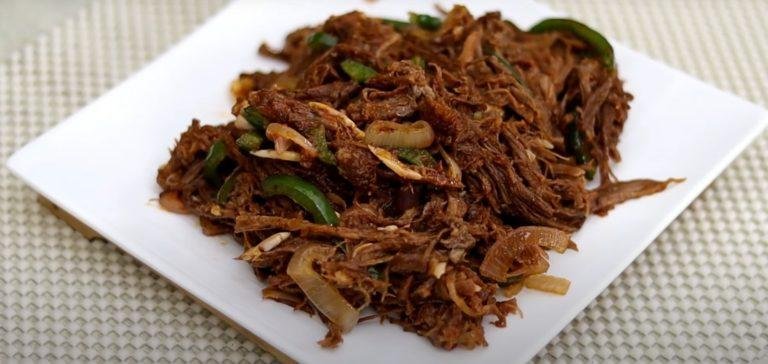
On their own with a cold drink they are a bar snack, and that is how most of them get eaten. Salt, garlic and acid ask for something cold and plain alongside: a beer, a malta, or a lemonade with plenty of ice. At the table they belong next to anything with juices worth chasing, which in a Cuban kitchen means roast pork, black beans, ropa vieja.
They also travel well as a side. A pile of mariquitas beside a Cuban sandwich gives you the crunch the pressed bread has already given up, and the leftover mojo works on the sandwich too. If you prefer your plantain thick and soft, the sweet fried plantains are the other side of the same ingredient, and there is no reason not to put both on the table.
What we cook on 78th Street
Mariquitas are best about ninety seconds after they leave the oil, which is the strongest argument there is for frying them yourself. What our kitchen handles is everything you would put around them: roast pork, black beans, rice, sweet plantains fried until the edges caramelise. The kitchen opens early most days and the lounge runs late Thursday through Saturday. Look through the full menu and order pickup for the whole table.