The croqueta preparada: croquettes inside the pressed sandwich
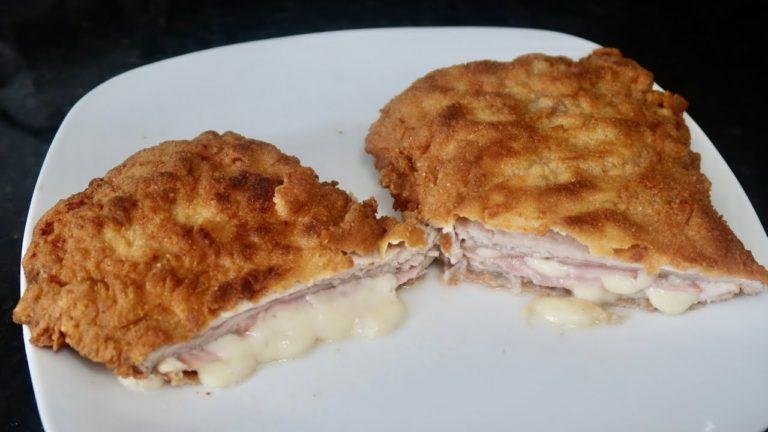
The idea is simple enough to sound like a joke until you eat one. Take a Cuban sandwich, already a complete thing, and put ham croquettes inside it. Then press it. The croquettes flatten, their crust gives way, the béchamel inside goes molten and spreads through the sandwich like a sauce, and what comes off the plancha is denser, softer and considerably richer than what went on. That is a croqueta preparada.
The croqueta comes first
You cannot understand the sandwich without understanding what is being pressed into it. Croquettes came out of French cooking in the nineteenth century, from croquer, to crunch, and Spain took to them completely. Croquetas de jamón became a fixture of Spanish home cooking, and Spanish families carried them to Cuba, where they became something slightly different.
A Cuban croqueta starts as a very thick béchamel: butter and flour cooked together, milk added slowly, the mixture beaten over heat until it pulls away from the pan in a mass. Finely ground ham goes in, along with onion, a little nutmeg and pepper. The paste is spread in a tray and chilled hard, usually overnight, because warm it is impossible to handle. It is then rolled into short cylinders about the size of a thumb, passed through egg and cracker meal or fine breadcrumbs, and fried until the outside is a deep even brown.
The Cuban version tends to be softer inside than the Spanish one, closer to a savory paste than to a sauce, and the breading is thinner and finer. That softness is the whole reason the preparada works. A croqueta that held its shape under a press would just be an obstruction.
The sandwich underneath
The base is a Cuban sandwich, which in this part of Florida means something specific. Cuban bread, split lengthwise, is spread with yellow mustard and sometimes butter on the outside. Then sliced ham, roast pork, Swiss cheese and dill pickles. In Tampa there is a fifth layer, Genoa salami, which is generally attributed to the Sicilian families who settled in Ybor City alongside the Cubans and Spaniards. Miami does not use salami and considers Tampa wrong about it. Tampa considers Miami incomplete. The Tampa City Council settled its own side of the question in 2012 by declaring the Cuban sandwich the signature sandwich of the city.
The bread matters more than any of the fillings. Cuban bread is lean, made with lard, baked into a long thin loaf with a crust thin enough to shatter under the press instead of fighting back. In Tampa it is traditionally baked with a wet palmetto frond laid along the top, which splits the crust down the middle as it rises. La Segunda Central Bakery has been making it in Ybor City since 1915. A Cuban sandwich on a baguette is a different sandwich, and it does not press correctly.
The plancha does the rest. A proper sandwich press has no ridges and applies real weight, and a good operator leans on it. The sandwich comes down to something like a third of its original height, the cheese runs, and the crust goes flat and crisp.
Where the preparada actually comes from
The honest answer is that no one can point to a first one. What is clear is that it is a bakery-counter invention rather than a restaurant dish, and the record for it is strongest in Miami, where Cuban bakeries and cafeterias sell croquettes by the dozen a few feet from where they press sandwiches. The two items were already sitting next to each other. Someone put one inside the other. Various bakeries and cafeterias get named in the retellings, and the names do not agree, which is usually a sign that the thing emerged in several places at once rather than being invented once.
It spread across Florida from there, and it is now standard on Cuban counters in Tampa, Hialeah, Orlando and anywhere else with a bakery and a press.
It also has an older and simpler ancestor: pan con croqueta. That is croquettes in buttered Cuban bread, pressed, and nothing else. It is a common street and counter item in Cuba itself, cheap food built on the two things a bakery always has. The croqueta preparada is that idea run through a full Cuban sandwich, which is to say the same instinct with more money behind it.
How it is built
The stack, from the bottom up, is usually:
- The bottom half of a length of Cuban bread, mustard spread across it
- Dill pickle slices, laid flat so they do not slide out under pressure
- Roast pork, then ham, then salami if the counter is in Tampa
- Two or three ham croquettes, split lengthwise or laid whole across the bread
- Swiss cheese over the croquettes, so the melt runs down into them
- The top half of the loaf, buttered on the outside
Some Miami counters add shoestring potato sticks, papitas, on top of the croquettes for a second crunch that survives the press. Some skip the salami, some skip the pork. What no version skips is the press, and the press is what makes it a distinct sandwich rather than a Cuban sandwich with something extra dropped in. The croquettes have to be crushed. Heat and pressure turn a fried object into a filling.
The ventanita
The croqueta preparada lives in a specific setting, and it is worth describing because it explains the sandwich. The ventanita is the walk-up window on the outside wall of a Cuban bakery or cafeteria. You do not go in. You stand at the window on the sidewalk, order in Spanish or English, and wait a minute.
What comes out of that window is a short list: colada, a full shot-glass tower of sweetened espresso poured out into tiny plastic thimbles and meant to be shared with whoever is standing there, which is the point of it; cortadito for one person; café con leche with buttered toast in the morning; pastelitos of guava and cheese; croquettes in a paper napkin; and pressed sandwiches. The window functions as a neighborhood institution. People stop there twice a day and hold conversations standing up.
The preparada exists because of that counter economics. Croquettes are cheap protein already made and already fried, sitting under a heat lamp. The sandwich press is already hot. Combining them costs the bakery almost nothing and produces something substantial enough to be lunch. That is the same reasoning that produced most good working-class food, in Ybor and in Havana both: use what is already on the counter, apply heat, sell it for a fair price.
Why it works
Texture, mostly. A Cuban sandwich is a study in contrast between crisp crust and soft interior, but everything in it is firm. The croquettes break that pattern. Under the press their breading softens against the melting Swiss while the béchamel loosens and behaves like a sauce, so you get one section of the sandwich that is creamy in a way nothing else on a Cuban menu is. The mustard and pickle keep it from becoming heavy, which is the only thing standing between the croqueta preparada and too much.
It is not subtle and it does not pretend to be. It is a sandwich that a bakery counter invented for people who needed to eat well and quickly and did not want to think about it.
Kiki’s is at 5555 S 78th St in Tampa. Both halves of this sandwich are on our list — the croquettes and the Cuban sandwich — along with everything else on the menu.