Kitchen Secrets with Our Cuban Chef – Fricasé de Pollo
Fricasé de pollo is chicken braised in tomato and dry wine until the meat gives way at the bone. Potatoes cook in the same pot and take on the colour of the sauce. Olives and capers go in at the end, and they are the reason the dish tastes of something instead of just tasting of stewed chicken.
It is everyday food. One pot, one burner, a little over an hour and a half at the stove. Most of what goes into it keeps in a cupboard, which is part of why it never left the rotation in Cuban kitchens.
Nothing here is difficult, but the order matters. Marinate, brown, build the base, then leave it alone. Skip the browning and you end up with a pale, thin sauce that never recovers.
Where the fricasé got its name
The word came into Spanish from French. A fricassee, in French cooking, is meat cut into pieces, cooked gently in fat and then finished in liquid. It sits halfway between a sauté and a stew. The classic French versions stay pale on purpose: the meat is not browned, and the sauce is finished with cream and egg yolk.
The Cuban dish kept the method and threw out the colour scheme. Tomato does the work that cream does in France, and underneath it sits sofrito, which is onion, green pepper and garlic softened slowly in olive oil. Almost everything that goes in after that arrived with Spain: olives, capers, bay leaf, cumin, dry wine, olive oil. Those are pantry goods. They keep for months in a hot climate without refrigeration, which is why they run through so much Cuban cooking.
The rest is local practice. The chicken is marinated in sour orange, the same way pork is. Potatoes go in to stretch one bird across more plates. Some families add raisins, which sounds wrong until you taste them against the brine of the olives. Cuban cooks also reach for vino seco, a salted dry cooking wine sold for exactly this kind of pot. If that is what you have, hold your salt back until the very end.
Ingredients
- 4 lb bone-in chicken leg quarters, separated into thighs and drumsticks
- 1/2 cup sour orange juice, or 1/4 cup lime juice plus 1/4 cup orange juice
- 8 garlic cloves: 4 mashed to a paste for the marinade, 4 sliced thin for the pot
- 2 tsp ground cumin
- 2 tsp dried oregano
- 2 tsp salt, plus more to finish
- 1 tsp coarsely ground black pepper
- 1/4 cup olive oil
- 1 large yellow onion, sliced thin
- 1 large green bell pepper, seeded and sliced thin
- 1 cup (8 oz) tomato sauce
- 1/2 cup dry white wine
- 1 1/2 cups chicken stock or water
- 2 bay leaves
- 2 lb waxy potatoes, peeled and cut into 1 1/2-inch chunks
- 1/2 cup pimiento-stuffed green olives, left whole
- 2 tbsp capers, drained
- 1/4 cup raisins (optional)
How to make fricasé de pollo
- Put the chicken in a large bowl with the sour orange juice, the 4 mashed garlic cloves, the cumin, the oregano, 2 teaspoons of salt and the pepper. Turn every piece until it is coated, cover, and refrigerate 2 to 12 hours. Two hours seasons the surface. Overnight gets the garlic and citrus down to the bone.
- Take the bowl out 30 minutes before you cook so the chicken loses its chill. Lift the pieces out and keep the marinade. Pat every piece dry on all sides with paper towels. Wet skin steams and stays grey, and grey skin gives you no sauce.
- Heat the olive oil in a wide, heavy pot over medium-high until it shimmers. Brown the chicken in two batches, skin side down first, 4 to 5 minutes a side, until it is deep golden and the skin lets go of the pot on its own. Do not force a piece that sticks; give it another minute. Move the browned pieces to a plate.
- Pour off all but about 3 tablespoons of fat and turn the heat to medium. Add the onion and green pepper with a pinch of salt and cook 8 to 10 minutes, stirring, until they are soft and translucent and the onion edges begin to caramelise. Add the sliced garlic and cook 1 minute more, until it smells sweet rather than raw.
- Stir in the tomato sauce and cook it 3 to 4 minutes, until it darkens a shade and pulls away from the bottom of the pot when you drag a spoon through it. Add the wine and the reserved marinade, scrape the browned bits off the base, and let it bubble 3 minutes to cook off the raw edge of the alcohol and the citrus.
- Return the chicken and any juices left on the plate. Add the stock and the bay leaves. The liquid should come about two thirds of the way up the pieces. Bring it to a bare simmer, cover, and cook 25 minutes at a lazy bubble, turning the pieces once halfway through.
- Push the potatoes down into the liquid, cover again, and cook another 20 to 25 minutes, until a knife slides into a potato with no resistance and the meat has pulled back from the ends of the drumstick bones.
- Stir in the olives, the capers and the raisins if you are using them. Take the lid off and simmer 8 to 10 minutes, until the sauce coats the back of a spoon and holds a line when you draw a finger through it. Fish out the bay leaves. Taste for salt now, and only now.
- Take the pot off the heat and let it stand uncovered for 10 minutes. Spoon the orange fat off the surface. The sauce tightens as it rests, so if it goes past thick, loosen it with a splash of hot stock before you serve.
Chef’s notes
- Use bone-in dark meat. Boneless breast is dry by the twentieth minute and there is no way back from it. Leg quarters hold their juice through a long braise, and the bones and skin are what give the sauce body without any flour.
- The two things that ruin the browning are wet chicken and a crowded pot. Both drop the temperature, the pieces sit in their own liquid, and nothing sticks to the base to flavour the sauce later. Work in batches even if it costs you ten minutes.
- Potatoes go in late, and they should be waxy. Starchy baking potatoes fall apart in the sauce and turn it thick and cloudy. If starchy is all you have, cut them larger and give them only the last 20 minutes.
- Salt the marinade, then wait. Olives and capers are salty, vino seco is saltier still if you use it in place of the wine, and the sauce concentrates as it reduces. A pot seasoned to taste at minute ten is usually too salty at minute seventy.
What to put on the plate with it
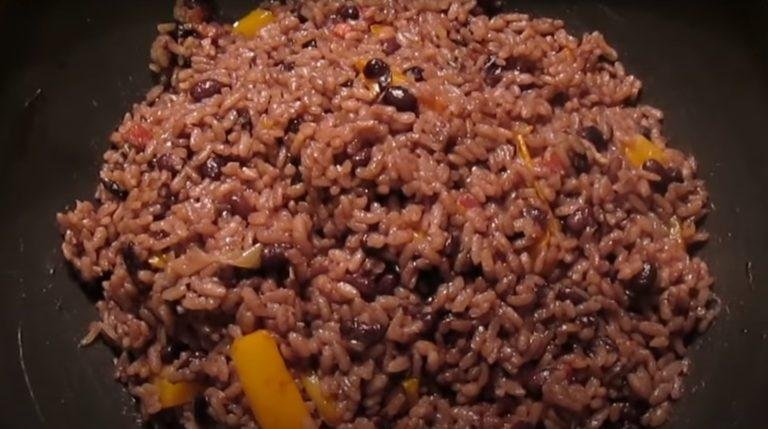
The standard plate is fricasé over white rice, with the sauce spooned across the rice rather than kept to one side. Nothing complicated needs to go with it, because the pot already holds meat, starch and sauce. Sweet plantains are the usual partner, and their sweetness sits against the olives and capers the same way the raisins do.
Bread earns its place here. A piece of Cuban bread pushed through what is left in the pot is the reason to make extra sauce in the first place. If you want something green, keep it plain: lettuce, tomato, thin onion, oil and vinegar. Beans are optional and many cooks skip them, since the potatoes have already covered that ground. The dish also reheats better than it cooks, so make it a day ahead when you can and warm it gently with a little stock to bring the sauce back.
Come eat it while there is still some left
Fricasé is a pot dish, which means it runs out. If you would rather not stand over a burner all afternoon, we cook Cuban food every day at 5555 S 78th St in Tampa, and you can order for pickup or catering straight from the menu. The chicken leg quarter is the same cut this recipe is built on, and it comes with rice and a side if you want the plate without the pot.