
What to Order at a Cuban Restaurant If You Have Never Been
You walk in, someone hands you a menu, and half of it is in a language you can read but do not recognize. Medianoche. Tostones. Colada. That is a normal first visit to a Cuban restaurant, and the usual result is that people order the one thing they already know and leave without tasting what the kitchen is actually built around.
What to order at a Cuban restaurant comes down to four things, and here is the path we would give you if you sat down at the counter and said you had never done this. One sandwich, one plate, one side, one coffee. Four decisions, in that order. Between them you will have eaten what Cuban cooking rests on: pressed bread, pork marinated in citrus and garlic, starch fried until the edges go hard, and coffee with enough sugar to stand up on its own.
First decision: the sandwich
Order the Cuban sandwich. It is the reference point for everything else on the menu, and it is the fastest way to understand the food.
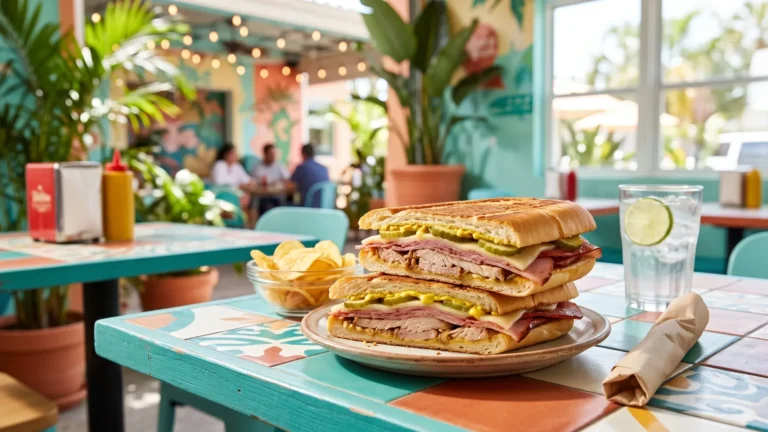
The build is short and fixed: ham, roast pork, Swiss cheese, yellow mustard, dill pickles, on Cuban bread. No lettuce. No tomato. No mayonnaise. The sandwich goes into a press and comes out about a third of its original height, the cheese pushed down into the pork, the crust flattened until it cracks when you bite it. Almost everything good about it happens under that press.
Tampa’s version adds Genoa salami, and that is the one thing separating it from the sandwich you get in Miami. The usual explanation is Ybor City: from the 1880s on, Sicilian immigrants lived and worked alongside Cuban and Spanish cigar workers, and the salami came in with them. Andrew Huse, Barbara Cruz and Jeff Houck, who wrote the book-length history of the sandwich, are careful to say the exact origin is not settled and the evidence is thinner than the story. What is documented is that in 1993 Tampa’s city council named the Cuban sandwich the signature sandwich of the city. If salami matters to you in either direction, ask when you order.
If a whole Cuban is more than you want
Take the midnight sandwich instead, the medianoche. Same family of fillings, but on soft egg bread that is faintly sweet, and normally smaller and gentler than the pressed Cuban. The name means midnight, and the common account is that it was sold late at night in Havana’s clubs to people coming out of shows. It is the better choice if you do not want a crust that fights back, and it is what most first-timers who think they dislike the Cuban end up preferring.
Second decision: the plate
A sandwich tells you about the bread. A plate tells you about the kitchen. Order the roast pork.
Cuban roast pork starts in mojo, which is sour orange juice, crushed garlic, oregano, cumin and salt. Then it goes into low heat for hours, until the muscle gives up and the meat pulls apart against the side of a fork. Sour orange is the part people miss when they try this at home with a regular navel orange. It is sharper, somewhere between a lime and a grapefruit, and it is what keeps the pork from tasting heavy.
A Cuban plate is assembled the same way almost anywhere you eat one: the meat, white or yellow rice, black or red beans, and a starch. That means a plate is rarely one thing. Read what already comes with it before you start adding sides, or you will end up with three starches and nowhere to put them.
Two alternates if pork is not for you. Breaded steak is beef pounded thin, breaded and fried flat, the closest thing on the menu to a schnitzel and the least surprising plate for someone who wants meat they recognize. Grilled chicken is the plainest thing in the kitchen, and there is no shame in ordering it on a first visit.
Third decision: the side
Plantains. This is the side that decides whether you come back.
They arrive one of two ways and they are not interchangeable. Maduros are ripe plantains, skin nearly black, fried until the sugar caramelizes: soft, sweet, dark at the edges, closer to a dessert than a vegetable. Tostones are green plantains, cut thick, fried, smashed flat, fried again: salty, starchy, hard-edged, built for dipping. Sweet or savory, and there is no wrong answer. Ask which one you are getting if the menu does not say.
If you want a second side, fried yuca is the other one worth knowing. Dense, mild, a little fibrous down the middle, and much better with citrus squeezed over it. Croquettes and stuffed potato are the small fried items people order without thinking, and they are also the two most likely to vanish before the rest of the food reaches the table.
Fourth decision: the coffee
Order it after the food, not with it, unless you came for breakfast.
A colada is not a drink for one person. It is a large cup of strong sweetened espresso that comes with a stack of thimble-sized plastic cups, and the entire point is that you hand them out: three to six people, one shot each. Ordering a colada for yourself is the most common first-timer mistake on this side of the menu, and it is the reason somebody ends up awake at two in the morning.
Cafe con leche is the safe one: espresso with hot milk, sweetened, about the size of a regular coffee. Straight espresso comes small and already sweet, with a pale foam on top called espumita. That foam is sugar whipped hard with the first few drops out of the machine, before the rest of the shot is poured in.
Doors open at 5 a.m. Monday through Friday, so cafe con leche with Cuban toast, which is buttered bread pressed flat and cut into lengths for dunking, is a normal order here rather than a novelty.
If you are picky, or feeding someone who is
Worth knowing up front: Cuban food is seasoned, not hot. The base of nearly everything is sofrito, which is onion, bell pepper and garlic cooked down in oil, plus cumin, oregano and bay leaf. There is no chile heat in the standard repertoire. If someone at your table says they cannot handle spice, this is one of the easiest cuisines there is for them.
Dependable orders for a cautious eater: grilled chicken, white rice, french fries, croquettes, a ham and cheese sandwich, macaroni salad, or a hamburger. For dessert, flan is set custard with caramel and it is the least adventurous sweet on any Cuban menu. Pastelitos are flaky pastries, usually guava or guava and cheese, and guava behaves like a firm jam rather than anything strange.
One caution. Pork turns up in more places than the word pork appears, including in some versions of the beans. If you avoid it for any reason, ask before you order rather than after.
Notes before you order
- Portions. A plate that arrives with meat, rice, beans and a side is a lot of food. Two people sharing one plate, one sandwich and one side usually eat better on a first visit than two people with two full plates.
- Pressed sandwiches do not travel. If you are taking one home, leave the bag open. Sealed up, the crust steams itself soft in about ten minutes, and the crust is the reason you ordered it.
- Coffee is a last stop. Espresso drinks are at their best within a few minutes of being pulled. A colada that rides home in a cup holder is not the same drink.
- Feeding a group. Catering is sold by the tray, including rice, beans and sweet plantains, which is a simpler and cheaper way to feed ten people than ten separate plates.
- Hours. Monday to Wednesday, 5 a.m. to 8 p.m. Thursday and Friday, 5 a.m. to 10 p.m. Saturday, 6 a.m. to 10 p.m. Sunday, 8 a.m. to 10 p.m. The lounge bar runs Thursday to Saturday, 10 p.m. to 3 a.m.
- If you would rather not decide at the counter. Call ahead at (813) 450-2176. We are at 5555 S 78th St, Tampa, and pickup orders can be placed online.
That is the whole path: a Cuban sandwich, a plate of roast pork, plantains on the side, coffee at the end. Four items, one visit, and after that you can order without anyone walking you through it. Everything else, the soups, the combos, the breakfast platters and the catering trays, is on the menu, and it will still be there the next time you come in.