
La Caja China: The Box, the Name and the Christmas Pig
November is when the phone calls start. Someone in the family has volunteered to do the pig this year, and suddenly there is a box to borrow, sixty pounds of charcoal to buy, and a butcher to call before every whole pig in Hillsborough County is spoken for.
The box is a caja china: a rectangular crate, plywood outside, sheet metal inside, with a rack for the pig and a shallow steel pan on top that holds the fire. The coals sit above the meat, not below it. A pig that would take eight or nine hours on a spit comes out of the box in about four.
People ask us this across the counter: why is it called a caja china? Two answers get repeated. Neither one has been proven.
Two stories about the name
Both versions are told with total confidence, usually by someone standing next to a lid that is already too hot to touch. They are worth separating, because only one of them makes a historical claim.
The Havana Chinatown story
The Chinese presence in Cuba is not folklore. The first shipload of indentured laborers, 206 men from Amoy, reached Havana on June 3, 1847 aboard the Oquendo. Over the following decades roughly 125,000 more arrived under eight-year contracts that were slavery in all but name. The ones who outlived their terms and stayed built the Barrio Chino around Zanja and Dragones streets, which by the early twentieth century was one of the largest Chinatowns in the Americas, with its own groceries, laundries, theaters and Chinese-language newspapers.
The story goes that Cubans saw cooks in that neighborhood roasting meat inside a closed wooden box with the fire on the lid, copied the idea, and named it after the people they borrowed it from. Roberto Guerra, the man who later put the box into production in Florida, has said he remembers seeing exactly that in Havana in the 1950s, before he left the island.
The older sense of the word china
The second explanation needs no Chinese cook at all. In Cuban and wider Caribbean Spanish, chino and china have long worked as modifiers for anything clever, intricate, foreign or hard to explain. A cuento chino is a tall tale. A trabajo de chinos is work so fiddly it borders on absurd. When a Cuban says no lo salva ni el medico chino, the reference is to Cham Bom-Bia, a Chinese herbalist who practiced in Cardenas in the 1800s and built a reputation for curing what nobody else could. The same habit shows up in music, where the Spanish name for the wood block percussion instrument is caja china.
Read that way, the name means something closer to the clever box than the box from China. A crate of plywood that cooks a whole animal by turning an oven upside down earns that label without any immigrant inventor attached to it.
What can actually be documented
Not much. No Cuban source from the nineteenth or early twentieth century describes the box. Chinese roasting practice, then and now, runs on vertical drum ovens and hanging hooks rather than a coal-topped crate, which weakens the direct-lineage version. The linguistic explanation is unprovable by nature, because that is how idioms work. The origin of the name is genuinely disputed, and anyone who states one version as settled fact is repeating a story rather than citing a source.
Miami, 1985
The part with a date on it is recent. Roberto Guerra, who left Cuba as a young man, began building the boxes in Miami and selling them under the name La Caja China in 1985. The business is still run by his family, the name is a registered trademark, and the design has barely moved since: plywood shell, galvanized lining, wheels on one end, a lid that doubles as a charcoal tray. Boxes from other makers are usually sold as roasting boxes or cajas asadoras for that reason.
So be careful about how old this tradition is. Roasting a whole pig for Nochebuena, the night of December 24, is old. Doing it in this box is not. In Cuba the standard methods were en pua, the pig lashed to a green pole and turned by hand over coals for most of a day, or a pit dug in the ground, lined with stones and covered over. Both need land, time and somebody willing to stay with the fire all afternoon. The box needs a driveway and four hours.
That is what spread it. From Miami the box moved up the state through the 1980s and 1990s. Tampa already had a Cuban kitchen of its own going back to the founding of Ybor City in 1885, so the box did not introduce roast pork here. It made the December version possible for people with a small yard.
How the box actually works
Think oven, not grill. The pig goes in butterflied and flat, ribs up and skin down, clamped between two racks. The lid drops on, the ash pan sits on top of the lid, and the charcoal goes on the pan. Heat radiates down through the metal, reflects off the lining, and surrounds the meat from every side. Fat drips onto the floor of the box, well away from any fire, so there are no flare-ups and nothing scorches. It also means what you get is roast pork, not barbecue. Very little smoke ever reaches the meat.
The rhythm for a pig of 60 to 100 pounds runs like this. Light about 16 pounds of charcoal in a chimney, let it ash over for 20 to 25 minutes, then spread it evenly across the pan. Add 9 or 10 pounds every hour after that. At roughly the three-hour mark, pull the pan off, take the lid off, and flip the pig skin side up. Score the skin in a diamond pattern, put everything back together, and give it another 30 to 45 minutes. Total elapsed time lands close to four hours, and you will go through 50 to 60 pounds of charcoal getting there.
Use a thermometer, not the clock. The USDA minimum for whole cuts of pork is 145F with a three-minute rest, but the shoulders and hams of a whole hog are better carried to 160 or 165F, where the connective tissue finally lets go. Check the thickest part of both, away from bone. The skin is done when it has gone hard and blistered and cracks under the edge of a knife.
Chef’s notes
- Order the pig now. Whole pigs for December 24 get reserved through November. Ask for it dressed, split, and with the skin left on.
- Do the math on size. Figure roughly a pound and a half of dressed weight per adult. A 60-pound pig feeds about forty people once you account for bone.
- Marinate the night before. Mojo is sour orange juice, a lot of crushed garlic, oregano, cumin and salt. Inject it into the hams, shoulders and loin with a syringe, rub the rest over the meat side, and hold the pig in a cooler on ice for 12 to 24 hours. Keep the marinade off the skin.
- Dry the skin. Wipe it down before the pig goes in and leave it bare. Moisture on the skin is the main reason crackling comes out leathery instead of brittle.
- Light charcoal in a chimney. Never add lighter fluid to a pan that is already hot.
- Add time for weather. A cold night or a steady wind can cost you 30 to 45 minutes. Set the box out of the wind if the yard allows it.
- Leave the lid alone. Every look costs heat, and there is nothing to check for the first three hours.
- Plan for the ash. The pan carries several pounds of live coals at chest height. Move it with two people and heavy gloves, and let it sit until it is stone cold before you empty it.
- Rest, then pull. Give the pig 20 minutes before you touch it. Pull the meat by hand and chop the skin separately so it stays crisp.
Done right, the box gives you two things at once: meat that shreds under a fork, and skin that shatters when you break it. That is the whole point of the four hours, and it is the reason the box beat the spit in one generation.
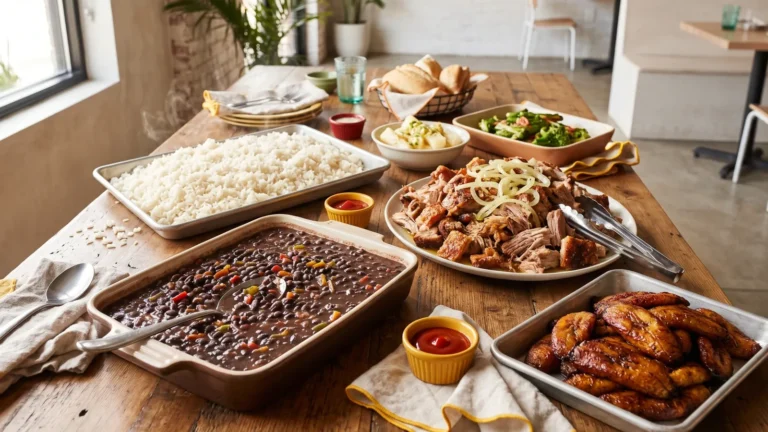
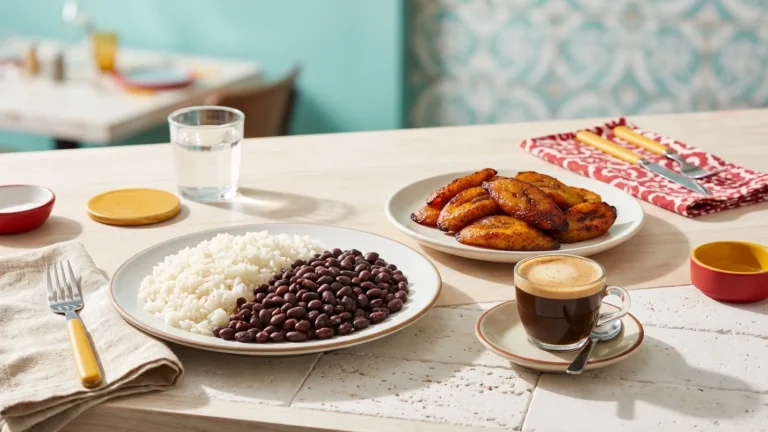
If the box is not happening at your house this year, the pig still can. Roast pork is on the list all year, by the pound or in a catering tray, and black beans and rice go beside it the way they always have. The rest is on our menu, and pickup orders go through the site. We are at 5555 S 78th St in Tampa, open from 5am on weekdays, and the phone is (813) 450-2176.