Kitchen Secrets with Our Cuban Chef – Platanos Maduros
A plantain that looks ready for the bin is the one you want. Skin at least three-quarters black, soft when you press it with a thumb, a little sticky where the stem was. Inside, the starch has turned to sugar, and the fruit will fry down into something dense and almost creamy, with edges that caramelise nearly to the colour of molasses.
Plátanos maduros are the sweet half of the plantain. The other half is tostones: green fruit, smashed and fried twice, salted, crisp. Same plant, opposite ends of its life, opposite techniques. Tostones want high heat and force. Maduros want a low flame and patience.
Three ingredients, one of which is salt, and about twenty minutes at the stove. Whether they come out well has almost nothing to do with skill and almost everything to do with two things: how ripe the fruit is, and how hot the oil is. Both are easy to get right once somebody tells you what to look for.
How the plantain became the backbone of the Cuban plate
The plantain is not native to the Americas. It comes from Southeast Asia, moved west into Africa long before Europeans arrived, and crossed the Atlantic on Spanish and Portuguese ships in the sixteenth century. In the Caribbean it found the climate it wanted, hot and wet with no real winter, and it fruited year round. That mattered more than flavour. A crop that feeds people in August and in February becomes a staple whether anyone plans it or not.
Cuban cooking uses the plantain at every stage of its ripening. Green, it is sliced paper-thin for mariquitas or smashed and fried twice for tostones. Half-yellow and still firm, it goes into ajiaco and thickens the pot. Fully ripe, it is cut into slices and fried as maduros. There is also plátanos en tentación, a richer treatment cooked down with butter, sugar and cinnamon until the slices turn almost jammy. That one sits close to a dessert and is a different dish from the everyday fried maduro.
On the plate, maduros do a specific job. Cuban main courses lean on salt, garlic, sour citrus and cumin. A pile of sweet, soft plantain sits against all of that and resets your mouth between bites. It is not a dessert and it is not a garnish. It is the counterweight, and a Cuban plate without it feels one-sided.
Ingredients
- 4 very ripe plantains, skins at least three-quarters black and soft to the touch
- 500 ml (2 cups) neutral oil for frying, such as canola, corn or vegetable
- 1/4 teaspoon fine salt, or more to taste
How to make plátanos maduros
- Check the fruit before anything else. If your plantains are still yellow with green at the tips, leave them on the counter out of direct sun for five days or more, until the skins go mostly black and the fruit yields when you press it. Do not hold them in the fridge; cold stalls the ripening and the flesh stays starchy.
- Peel them. Cut off both ends, then run the tip of a paring knife down the length of each ridge, cutting through the peel only. Lift the peel away in strips with your thumb. A properly ripe plantain gives up its skin in seconds. If you are fighting it, the fruit is not ready.
- Slice on a long diagonal, about 1.5 cm (just over half an inch) thick. The angle gives you more surface to brown. Thickness matters more than the angle: thinner slices collapse in the oil, thicker ones stay firm in the middle.
- Pour oil into a heavy frying pan to a depth of about 1 cm (a generous 3/8 inch) and bring it to 160°C (320°F). Without a thermometer, drop in one slice. It should sizzle quietly and drift, not spit and roar. Oil that is too hot scorches the sugar long before the inside softens.
- Lay the slices in a single layer with space between them and fry for three to four minutes without touching them. You are waiting for the underside to go deep gold with darker amber at the edges. Expect to work in two or three batches.
- Turn each slice once, with tongs or a thin spatula, and give the second side two to three minutes. Watch the edges closely from here on. Once they are dark amber they will tip over into burnt within the next minute.
- Lift the slices onto a rack or a paper towel and salt them lightly while the surface is still hot and open. Let the oil climb back to temperature for a minute before the next batch goes in.
- Serve them within a few minutes of the last batch. As they cool the centres firm up and lose the soft, custardy texture that makes them worth the trouble.
Chef’s notes
- An under-ripe plantain cannot be rescued. Yellow fruit with green tips browns on the outside and stays chalky and dry in the middle, however long you cook it. Buy them several days early and let them sit.
- Oil that runs too hot is the most common failure by a wide margin. If the first slice darkens in under a minute, pull the pan off the heat for two minutes and let the temperature drop before you carry on.
- Crowding the pan drops the oil temperature and the slices steam instead of frying. They stick to each other, soak up fat and turn greasy. Leave a finger’s width between them.
- Turn them once and only once. Every extra flip tears the softened surface, and the exposed sugars catch on the pan and burn.
What to put on the plate with them
Maduros belong next to something salty and slow-cooked. Roast pork shoulder is the standard partner, because the garlic and sour orange in the pork and the sugar in the plantain work on each other. Put black beans and rice underneath and you have the plate most Cuban households eat several times a week. Ropa vieja, picadillo and anything braised with tomato behave the same way.
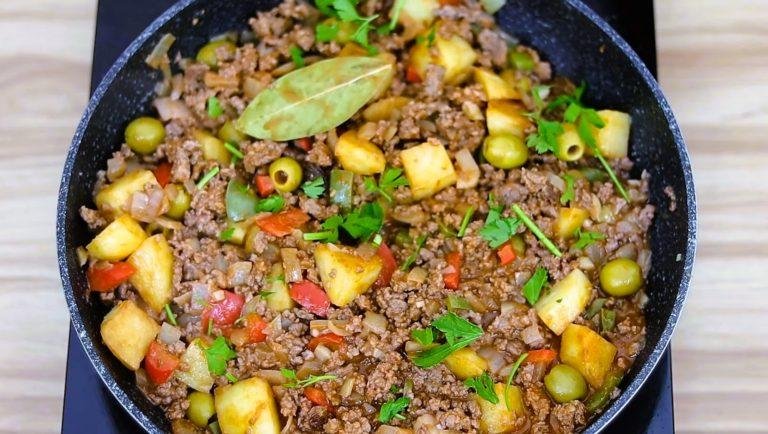
Choose between maduros and tostones by what the rest of the meal is doing. If the main dish already runs sweet, with plantain in the braise or raisins in the picadillo, go green and salty with tostones. If it is straightforwardly savoury, go ripe. Maduros are also good the next morning, cold from the fridge, next to a fried egg. Make a larger batch than you think you need; they go before anything else on the table.
Come and eat them hot
Plantains are on the menu every day at 5555 S 78th St in Tampa, and you can add them to a pickup order alongside anything else on the menu. If you would rather make them at home, start the fruit ripening now and look at it every morning. The day the skin goes black and your thumb sinks in is the day to fry.