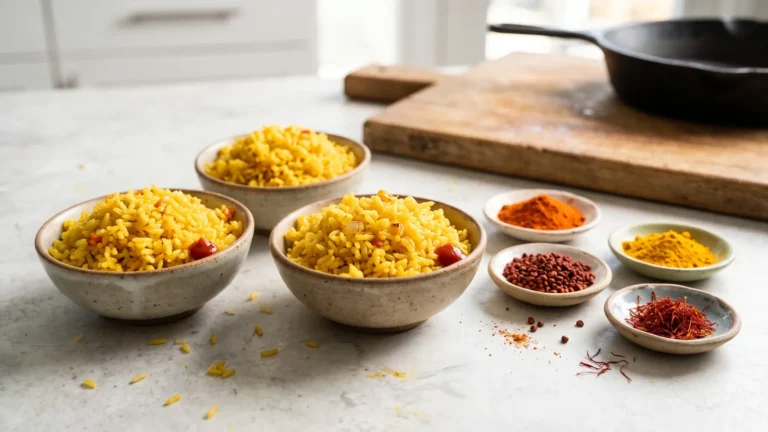

Kitchen Secrets with Our Cuban Chef – Arroz Frito Cubano (Cuban Fried Rice)
Cuban fried rice — arroz frito — is what people order when they want a little of everything. Roast pork, ham, shrimp, scrambled egg and scallion all land in the same pan, held together by rice that spent the night in the refrigerator. One plate, four proteins, nothing else needed next to it.
Fried rice sits on nearly every Cuban menu because Chinese and Cuban cooks have shared the same island kitchens since the mid-1800s, and the dish crossed over so completely that most families stopped thinking of it as borrowed. It stayed because it is practical: a Cuban kitchen always has cold white rice, a piece of roast pork and the end of a ham, and arroz frito turns those three into a full plate.
What follows is the restaurant build. It runs darker than takeout fried rice, heavier on garlic, and the pork is not an afterthought. Get four things right — cold rice, a hot wide pan, cooking in stages, soy sauce added last — and the rest is chopping.
Cold rice is most of the recipe
Fresh rice is wet rice. The grains are still full of loose water and the starch has not set, so the moment they hit a hot pan they throw steam and stick to each other. You end up stirring porridge that happens to have pork in it.
Rice that has been refrigerated overnight behaves differently. As it cools, the starch retrogrades: the molecules tighten, the grain firms, and surface moisture pulls back into the kernel. Cold grains separate under a spoon instead of smearing, and they take direct heat long enough to toast rather than steam.
Cook the rice the day before, plain, with salt and no oil. Long-grain is correct here; short-grain and parboiled both fight you. Spread it on a sheet pan while it is warm, let it come to room temperature, then cover it loosely and refrigerate at least eight hours. If all you have is rice from an hour ago, spread it thin across two sheet pans and leave it uncovered in the refrigerator for ninety minutes. Not the same, but workable.
Break the cold rice apart with your fingers before you cook. Squeeze every clump until the grains run loose. A clump that goes into the pan whole comes out of the pan whole.
Four proteins, four different moments
The common mistake is treating the pork, ham, shrimp and egg as one ingredient dumped in together. They cook at different speeds, and each one leaves something in the pan that the next one uses.
The egg goes in first and comes out first. Scramble it soft in a film of oil, break it into pieces the size of a thumbnail, set it aside. Left in for the whole cook it turns to rubber and vanishes into the rice.
The shrimp need sixty to ninety seconds. Small shrimp, 51/60 count, sear in about the time it takes to say so. Pull them the moment they curl and go opaque at the edge. They finish in the residual heat when they go back in at the end.
The ham is there for salt and fat. Diced small and left alone for a minute, it browns at the corners and renders enough to season everything that follows. Smoked ham beats boiled.
The pork should already be cooked. Leftover roast pork is the right starting point. Cut it into half-inch pieces with some of the crisp outside still attached, and give it only enough time to heat through and pick up color. Raw pork cooked from scratch in the same pan turns grey and tough.
Heat, and the pan you actually own
A wok on a home burner will never match a restaurant range, so change the approach instead of chasing the flame. Use the widest pan you have. A 12- or 14-inch skillet beats a small wok. Cook in stages so the pan never drops below a hard sizzle. Crowding is what ruins fried rice: if the food stops hissing, the pan has gone cold and everything is steaming.
Add the soy sauce down the hot side of the pan, never into the middle of the pile. It hits bare metal, reduces on contact, and coats the grains. Poured over the top it wets the rice and undoes the toasting you just built.
Names you will see on menus
Arroz frito especial, or con todo, means all of it: pork, ham, shrimp, chicken, egg. Con camarones is shrimp only, con pollo is chicken only, and plain arroz frito with no qualifier usually means pork and egg. The recipe here is the con todo version minus the chicken, which most home cooks skip.
Ingredients
- 6 cups cooked long-grain white rice, cold, made the day before (about 2 cups raw)
- 8 ounces roast pork, cut into 1/2-inch pieces
- 6 ounces smoked ham, cut into 1/4-inch dice
- 8 ounces small raw shrimp (51/60 count), peeled and deveined
- 4 large eggs, beaten with a pinch of salt
- 6 scallions, sliced thin, white and green parts kept separate
- 5 cloves garlic, minced
- 1/2 medium yellow onion, cut into 1/4-inch dice
- 1/4 cup soy sauce
- 1/4 cup neutral oil, plus 1 tablespoon for the eggs
- 1/2 teaspoon freshly ground black pepper
- 1 cup bean sprouts (optional)
- 1 lime, cut into wedges, for serving
Method
- Cook the rice the day before. Spread it on a sheet pan to cool, then refrigerate it overnight. Before you start, break every clump apart with your fingers so the grains run loose.
- Set everything within arm’s reach of the stove: rice, pork, ham, shrimp, beaten eggs, scallions, garlic, onion, soy sauce, oil. Once the pan is hot there is no time to chop.
- Heat 1 tablespoon oil in a 14-inch skillet or wok over medium-high. Pour in the eggs, let them set for ten seconds, then push them around until barely cooked. Turn them onto a plate and break them into thumbnail-sized pieces.
- Raise the heat to high. Add 1 tablespoon of the remaining oil, then the shrimp in one layer. Sear 45 seconds, turn, sear 30 seconds more, and remove them as they curl. They should still be slightly underdone.
- Add another tablespoon of oil and the ham. Leave it alone for a minute so the cut faces brown, then stir 30 seconds. Add the pork and heat through, about 1 minute. Move both to the plate with the shrimp.
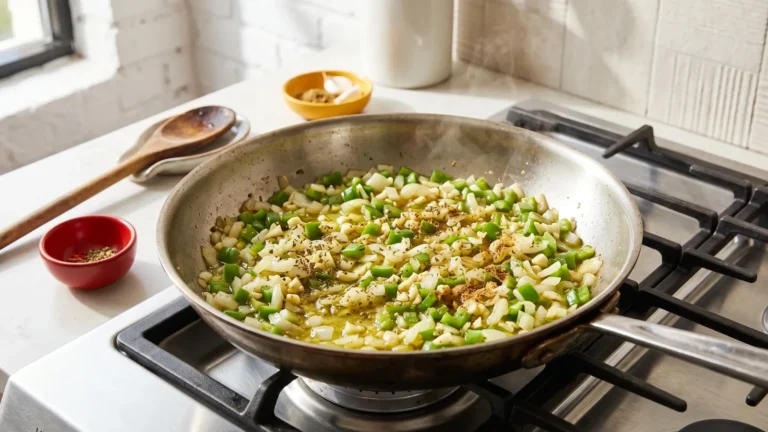
- Add the last 2 tablespoons of oil, the onion and the scallion whites. Cook 90 seconds, until the onion turns translucent at the edges. Add the garlic and black pepper, stir 20 seconds and no longer, because garlic burns fast in a pan this hot.
- Add all the rice at once. Spread it into a single layer and leave it undisturbed for 45 seconds so the bottom toasts. Toss, spread again, repeat twice. The grains should start to jump.
- Pour the soy sauce around the edge of the pan, not over the rice. Toss hard for 30 seconds, until the color is even and no grain is pale.
- Return the pork, ham and shrimp, and add the bean sprouts if you are using them. Toss 45 seconds, then fold in the egg and the scallion greens and cut the heat.
- Taste before you add salt. Between the ham and the soy sauce it is usually there already. Let it sit one minute off the heat, then serve with lime wedges.
Chef’s notes
- Rice ratio. Two cups of raw long-grain rice cooked in three cups of water gives you the six cups you need, dry enough to fry.
- Color. If your rice looks pale, the answer is not more soy sauce. It is a hotter pan and more toasting time before the sauce goes in.
- Fat. Three tablespoons of oil plus one tablespoon of rendered pork fat tastes closer to the restaurant version than oil alone.
- Shrimp size. Large shrimp look better and cook worse. 51/60 spreads through the rice; 16/20 sits on top and overcooks while you finish everything else.
- Reheating. Fried rice reheats badly in a microwave and well in a dry skillet over medium-high, one portion at a time, lid off.
The other way rice carries meat
Arroz frito is one of two answers to the same question. The other is meat rice, where the grains and the meat cook together in one pot and the rice comes out soft and seasoned all the way through instead of dry and toasted at the edges. Fried rice is for texture. Meat rice is for the days you want something softer.
If you would rather someone else stood at the pan, the rice, the roast pork and everything around them are on the menu. We are at 5555 S 78th St in Tampa, open from 5am on weekdays, and you can order ahead for pickup or call (813) 450-2176.