
Kitchen Secrets with Our Cuban Chef – Bistec Empanizado
Bistec empanizado is a thin steak, marinated in garlic and sour orange, breaded, and fried until the outside is dry and crisp. It is also one of the easiest Cuban plates to ruin: the coating peels off in the pan, or it goes soft before the plate reaches the table.
Nothing about it is difficult. What matters is the order of operations and a little patience at two points.
What it is, and what it is not
Bistec empanizado is one steak, breaded. Bistec uruguayo is two thin steaks with ham and cheese pressed between them, sealed around the edge, then breaded the same way. Same crumb, same pan, different dish. The uruguayo has melting cheese inside, so it wants a cooler pan and a tight seal. If that is the one you want, it has its own page as the uruguayo. Everything below is the plain steak.
Breaded cutlets travel: cotoletta in Milan, schnitzel in Austria, milanesa in Argentina and Uruguay. The Cuban difference is the marinade.
The cut
Use palomilla, top sirloin sliced thin across the grain. Ask for about a third of an inch and pound it down from there. Bottom round works if you pound harder.
Trim the gristle around the outside edge, then nick what is left every inch with a knife tip. Connective tissue shrinks faster than muscle, so a steak with an intact rim curls into a bowl in hot oil and cracks its crust along the fold. Pound between two sheets of plastic with the flat face of the mallet; the toothed face tears holes, and holes leak.
Marinate first, bread second
The order is fixed. Marinade goes on raw meat, breading goes on dried meat. Breading a wet steak is the main reason a crust ends up floating in the pan instead of sitting on the beef.
The marinade is a straight mojo: sour orange juice, garlic mashed with salt, oregano, cumin, black pepper, sliced onion. Naranja agria is the bitter orange sold in most Tampa markets. Without it, mix two parts lime juice to one part regular orange juice.
Mash the garlic with the salt into a paste first. Chopped garlic stays in pieces, and pieces that survive into the breading burn black in the oil. Two to four hours in the refrigerator is right. Acid moves fast through a quarter-inch steak, and past six hours the outer layer goes chalky. Overnight marinating belongs to pork shoulder, not to this.
Cracker meal or breadcrumbs
Cracker meal, without much argument. Galleta molida, ground soda crackers, is what Cuban kitchens have used for generations, and it behaves better in hot oil than bread. The grind is coarse and sandy rather than fine and dusty, and the crackers carry salt and a little fat from baking. It fries to a pale gold instead of a deep brown and holds its crunch after the steak leaves the pan.
Dry breadcrumbs are finer and brown much faster. On a steak that needs four minutes in total, they go dark before the frying is done. If they are all you have, drop the oil fifteen degrees and watch the colour. Skip panko: the flakes are too large for a thin steak.
To make your own, crush a sleeve of saltines in a bag with a rolling pin. Stop at coarse sand. Ground to powder it turns to paste against the egg and slides off in one sheet.
How to keep the coating from sliding off
Dry the steak
Lift each steak out of the marinade, scrape the onion away and press both sides with paper towels until the surface looks matte. Liquid left behind turns the flour into paste, and paste is a lubricant, not a glue.
Do not skip the flour
Flour is the mechanical link between wet meat and wet egg. Without it the egg has nothing to grip. Shake off every loose speck after dredging, because loose flour under the egg is the layer that gives way later.
Press, then rest
Bury the steak in the cracker meal and press hard with the flat of your hand on both sides. Set it on a wire rack and walk away for fifteen minutes. The flour pulls moisture out of the meat and the egg and sets into one bonded layer. That rest does more than any other step.
Leave it alone in the pan
Do not touch the steak for the first ninety seconds. Turn it once, with tongs, lifting from the edge. A spatula pushed underneath shears the coating straight off the meat.
How to keep it from going soggy
Oil temperature
350 degrees, measured with a thermometer. Below 325 the coating drinks oil before it seals. Above 375 the cracker meal darkens before the steak is through.
A rack, never paper
Paper towels trap steam under the steak, and steam softens a crisp crust in under a minute. Use a wire rack over a sheet pan so air moves underneath. Do not stack the steaks and do not cover them. To hold a batch, keep it on the rack in a 200-degree oven, uncovered.
Ingredients
- 4 palomilla steaks (top sirloin, sliced thin), about 6 oz each
- 1/2 cup sour orange juice, or 1/3 cup lime juice plus 3 tablespoons orange juice
- 8 cloves garlic, mashed to a paste with 1 teaspoon salt
- 1 teaspoon dried oregano
- 1/2 teaspoon ground cumin
- 1/2 teaspoon ground black pepper
- 1 small white onion, sliced thin
- 1 cup all-purpose flour
- 1/2 teaspoon salt, for the flour
- 3 large eggs
- 2 tablespoons whole milk
- 2 cups cracker meal (galleta molida)
- 1 teaspoon garlic powder, for the cracker meal
- 3 cups vegetable oil, for frying
- 2 limes, cut into wedges
Method
- Trim the gristle from the rim of each steak and nick the remaining edge every inch. Pound between two sheets of plastic to an even 1/4 inch.
- Mash the garlic with 1 teaspoon salt into a smooth paste. Stir it into the sour orange juice with the oregano, cumin and black pepper, then add the onion.
- Lay the steaks in a shallow dish, pour the marinade over and turn to coat. Cover and refrigerate 2 to 4 hours, no longer than 6.
- Set up three trays: flour with 1/2 teaspoon salt, eggs beaten with the milk, and cracker meal with the garlic powder.
- Lift the steaks out, scrape off the onion and press both sides dry with paper towels until the surface looks matte.
- Dredge one steak in the flour and shake off everything loose. Pass it through the egg and let the excess run back. Lay it in the cracker meal and press firmly with your palm on both sides.
- Set each breaded steak on a wire rack and leave it at room temperature for 15 minutes so the coating sets.
- Pour the oil into a heavy skillet to a depth of about 1/2 inch and heat to 350 degrees. A pinch of cracker meal should sizzle at once without browning on contact.
- Fry one or two steaks at a time without crowding. Give the first side 90 seconds to 2 minutes untouched, then turn once with tongs and fry 90 seconds more. The crust should be pale gold and sandy.
- Move each steak to a clean wire rack over a sheet pan. Do not stack them, cover them or drain them on paper towels.
- Skim the loose crumbs out of the oil and bring it back to 350 degrees before the next batch.
- Salt lightly while hot if it needs it and serve at once with lime wedges.
Chef’s notes
Keep one hand wet and one hand dry while you bread. One hand handles flour and cracker meal, the other handles egg. Mix them up and you spend the afternoon breading your own fingers.
For a heavier crust, run the steak back through the egg and cracker meal a second time. It eats more like a cutlet than a steak.
Raw onion belongs on top. Slice it paper thin, toss it with a spoonful of sour orange and a pinch of salt, and pile it on off the heat so it stays sharp.
Reheat leftovers in a dry skillet or in a hot oven on a rack. A microwave softens the crust in seconds and there is no bringing it back.
What goes on the plate
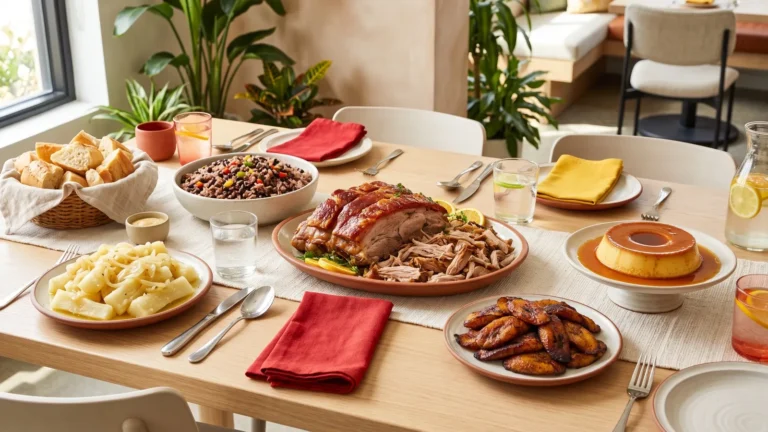
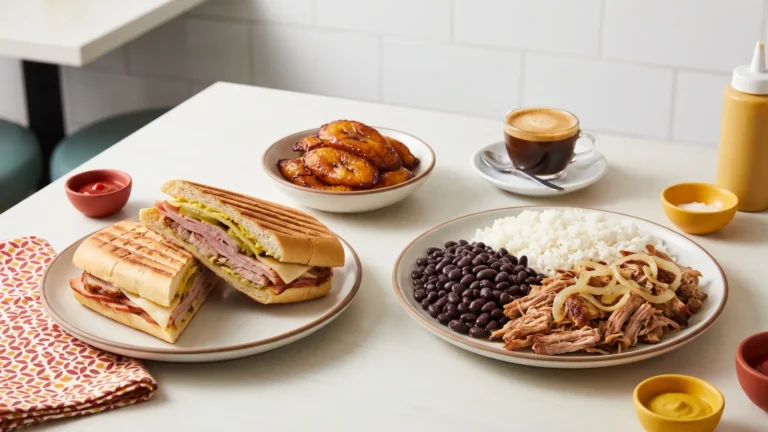
White rice and black beans, sweet plantains or tostones, and a wedge of lime. Nothing poured over the steak: sauce undoes everything the rack and the oil temperature were for. Squeeze the lime right before you cut.
If you would rather not heat three cups of oil at home, our breaded steak can be ordered ahead for pickup at 5555 S 78th St in Tampa. Call (813) 450-2176, or look through the full Cuban menu.