
The Noche Buena Table: What a Cuban Christmas Eve Dinner Looks Like
Noche Buena is December 24, and in Cuban households it outranks Christmas Day by a wide margin. The 25th is for leftovers and sleep. The 24th is the meal: a pig, black beans and rice, yuca under hot garlic, sweet plantains, bread, and something with caramel on top. The menu barely shifts from one house to the next, and that is the point. Everyone knows what they are walking into.
The dinner has a complicated history on the island. In 1969 the Cuban government dropped Christmas from the official calendar, a decision tied at the time to the ten-million-ton sugar harvest planned for 1970. It stayed off the calendar for 28 years, until December 1997, when it was restored ahead of Pope John Paul II’s visit that January. Families cooked anyway, quietly, and the menu came through intact. Among Cubans in Florida it was never interrupted at all.
The fixed menu
Six things. Everything else on the table is extra.
Lechon asado
The whole animal if you have the yard and the help, a bone-in shoulder if you do not. The marinade is mojo criollo: sour orange juice, a serious amount of mashed garlic, dried oregano, cumin, salt, black pepper, a little sliced onion. Sour orange, naranja agria, the Seville orange, is the flavor that makes it read as Cuban instead of generic roast pork. If your market does not carry it, use two parts orange juice to one part lime juice. There is no sugar in it, no ketchup, no barbecue rub, no smoke. Plan on three quarters of a pound of bone-in pork per person.
Whole pigs in Florida usually go into a box roaster with charcoal on the lid. Roberto Guerra started building and selling those boxes in Miami in 1985, and the design spread from there. The name people use for it points back to Chinese immigrants in Havana, but the origin of that name is disputed and nobody has produced a clear record of it, so treat it as a story rather than a fact.
Moros y cristianos
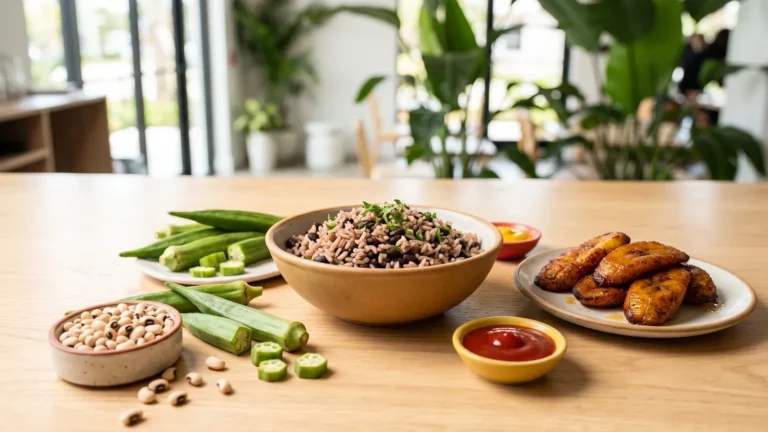
Black beans and white rice cooked together in the bean liquor, so the grains come out gray-black and taste like the pot they came from. The name refers to Moors and Christians, dark and light in one dish. In eastern Cuba the same technique with red beans is called congri, and in Havana people use both words for both dishes and then argue about it. The base is a sofrito of onion, green pepper, garlic, cumin, oregano and bay leaf, started in rendered bacon or salt pork.
Yuca con mojo
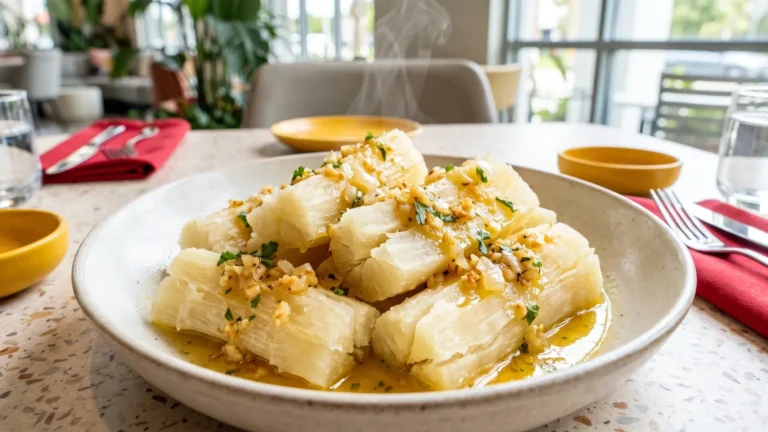
Cassava boiled until the edges collapse, drained, then buried under garlic mojo that has just come off the heat. Frozen yuca is not a compromise here. It is peeled, cored and sorted already, and it is usually fresher than the waxed roots on the produce shelf. Whatever you buy, pull out the woody cord running down the middle before it reaches the table.
Maduros
Ripe plantains, fried. The skin has to be black, not yellow, not spotted, with real give when you press it. A yellow plantain fries up starchy and flat. These go in the pan last, because they turn from tender to greasy in about ten minutes on a warming tray.
Cuban bread
Pan cubano is a lard-enriched loaf, baked with a moistened palmetto frond laid along the top so the crust splits as the dough rises. La Segunda Central Bakery in Ybor City has been baking it since 1915. Buy it the same day, keep it out of the refrigerator, and do not slice it until people are sitting down.
Flan and what sits beside it
Flan de leche: eggs, condensed and evaporated milk, vanilla, baked in a water bath over dark caramel. It has to be made ahead, which is exactly why it survives a night like this. Around it go the things that were always bought rather than cooked: turron from Alicante and Jijona, a bottle of Asturian sidra, mixed nuts still in their shells, dates. Some families also fry bunuelos, a yuca and malanga dough rolled into figure eights and soaked in anise syrup. Coffee comes after everything, and it keeps coming.
What to buy and what to cook
The families who enjoy their own party are the ones who cook three things and buy the rest.
- Buy the bread. Nobody bakes Cuban bread at home. The crust depends on a steam-injected deck oven.
- Buy the turron, the sidra, the nuts and the dates. These were never homemade.
- Consider buying the pork. A shoulder for twelve people occupies your oven for six hours on the one day you need it for everything else. Roast pork is on our menu, and picking it up frees the oven.
- Consider buying the two sides that take longest. We sell black beans and rice and sweet plantains by the tray, which removes a soaked pot of beans and a spitting pan of oil from your evening.
- Cook the yuca and the mojo. Thirty-five minutes start to finish, and garlic tastes better when it is minutes old.
- Cook the flan on the 22nd or 23rd. It needs a full night cold to set and unmold cleanly.
A timeline that works
Counted backward from a 9:00 p.m. dinner on the 24th, using an eight-pound bone-in pork shoulder rather than a whole pig.
- Two weeks out. Order the pork and reserve the bread. Bakeries and butchers both sell out during that week.
- December 22, evening. Put a pound of dried black beans in water to soak overnight. Buy sour oranges while they are still on the shelf.
- December 23, morning. Score the fat in a crosshatch, salt the shoulder heavily, and pour the mojo over it. Marinate 24 to 36 hours, turning it once.
- December 23, afternoon. Simmer the beans about 90 minutes and keep every drop of the liquor. Bake the flan and chill it overnight.
- December 24, 9:00 a.m. Pork out of the refrigerator to lose its chill.
- 10:00 a.m. Into a 300°F oven, covered, fat side up. Figure 40 minutes per pound.
- 3:15 p.m. Start checking. You want 195°F in the thickest part, away from the bone.
- 3:40 p.m. Uncover, raise the oven to 450°F for 20 to 30 minutes to blister the skin. Then rest it loosely tented. It holds fine for two hours.
- 4:30 p.m. Pick up the bread.
- 6:30 p.m. Sofrito, then the rice into the bean liquor. Off the heat by 7:15 with the lid on, and leave it alone.
- 7:45 p.m. Yuca into salted boiling water, 25 to 35 minutes.
- 8:20 p.m. Make the mojo and pour it over the drained yuca.
- 8:35 p.m. Fry the maduros.
- 8:50 p.m. Carve the pork, warm the bread, put the cider on the table.
Chef’s notes
- Salt the pork a day ahead, not an hour ahead. An hour only seasons the surface.
- Do not brown the garlic in the mojo. Heat the oil until one piece sizzles, pull the pan off the burner, then add the rest and the sour orange. Browned garlic turns the whole platter bitter.
- Sour orange is acidic enough to tighten the surface of the meat if it sits three days. Stay inside 36 hours.
- Use 1.5 cups of bean liquor for every cup of rice, a lid that actually fits, and no lifting.
- Dry the skin with paper towels before the high-heat stage. Wet skin steams instead of crisping.
- Oven space is the real bottleneck, not skill. One oven cannot roast pork, hold flan and warm bread in the same hour.
- Reheat leftover yuca in its own water. The microwave turns it to glue.
- Cook for the number of people who said yes, plus four.
The 25th belongs to cold pork
Christmas morning in a Cuban house smells like coffee and yesterday’s garlic. The pork comes out of the refrigerator firm, which makes it easier to slice thin against the grain than it was hot. Pile it on Cuban bread with raw onion and a spoon of cold mojo and that is pan con lechon, eaten standing up.
Then the sandwich. Roast pork, ham, Swiss, pickle and mustard, pressed until the cheese moves. In Tampa the local version also carries Genoa salami, a holdover from the Italian families who lived alongside the Cuban and Spanish workers in Ybor City, and in 2012 the city council named the Cuban sandwich the signature sandwich of Tampa. Leftover moros has one more life in it too: press it flat in a hot pan with a little oil until the bottom forms a crust, then slide it onto a plate under a fried egg.
None of this menu is difficult. It is just long, and it all lands within the same forty minutes. If you would rather spend the 24th with the people at your table than in front of your oven, build the night the practical way: order the pork and the trays, cook the yuca and the mojo yourself, buy the bread on the way home. The full menu is online for pickup and catering, and you can call us at (813) 450-2176 or come by 5555 S 78th St in Tampa to work out the numbers for your family.