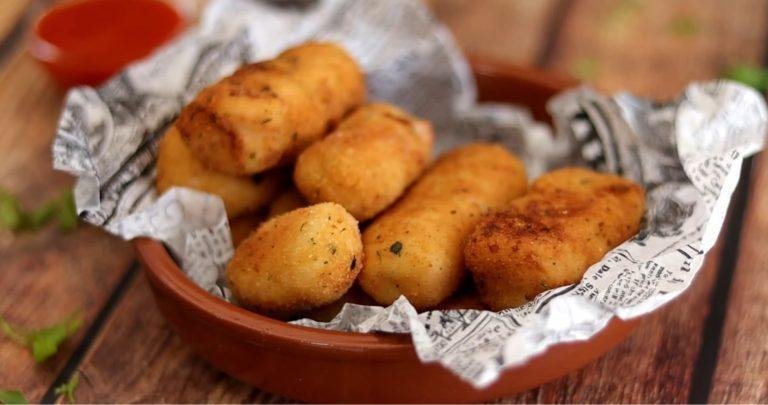
Kitchen Secrets with Our Cuban Chef – Buñuelos Cubanos
Buñuelos cubanos are not doughnuts, and there is almost no wheat in them. The base is boiled yuca and malanga, mashed while it is still hot and held together with one egg and a spoonful of flour. You roll that into ropes, twist them into a figure-eight, fry them, and drop them into warm anise syrup.
The texture is the reason to make them. The outside sets into a thin shell that cracks when you bite it. The inside stays dense and soft, closer to a boiled dumpling than to a fritter, and the syrup soaks in about a quarter of the way. Anise runs through both the dough and the syrup, so the flavour arrives twice.
They belong to December. In Cuban homes buñuelos come out at Nochebuena, after the roast pork, when the table has already been cleared once and someone puts on coffee. They are worth making at any point in the year, but they carry Christmas with them.
The Spanish fritter that changed its dough in Cuba
The buñuelo arrived with Spain. Fried sweet dough of that family has been made around the Mediterranean for centuries, and Spanish settlement carried the idea across the Atlantic. In Spain, and across much of Latin America, a buñuelo is still built on wheat flour: a batter or a soft yeasted dough, fried and rolled in sugar.
Cuba swapped the base. Wheat has to be imported to the island, while the ground gives up starchy roots without much argument. Yuca was a staple long before the Spanish arrived, cultivated by the Taíno; malanga is another root that has been grown there for generations. Cooks used what was in the house, and the result is a heavier, moister dough that fries into something no flour batter can copy. Some families add boniato or calabaza for colour and sweetness, but yuca and malanga are the backbone.
The shape is the other half of the tradition. The rope is twisted and closed into a figure-eight, and the usual explanation is that it stands for infinity turned on its side. Whether or not that is where it started, the shape is practical: the twist gives the buñuelo more edges, and edges are where the shell goes crisp and where the syrup collects.
Ingredients
- 1 lb (450 g) fresh yuca, peeled, woody core removed, cut into 2-inch pieces
- 1 lb (450 g) malanga, peeled and cut into 2-inch pieces
- 1 teaspoon fine salt, plus more for the cooking water
- 1 large egg, beaten
- 2 tablespoons all-purpose flour, plus a little more for the work surface
- 1 teaspoon anise seed, lightly crushed
- About 8 cups (2 litres) vegetable oil, or enough to come 2 inches up your pan
- 2 cups (400 g) granulated sugar, for the syrup
- 1 cup (240 ml) water, for the syrup
- 1 cinnamon stick, for the syrup
- 1 teaspoon whole anise seed, for the syrup
- 2 wide strips of lime peel, no white pith, for the syrup
- 1 teaspoon lime juice, for the syrup
- 1 pinch of salt, for the syrup
How to make buñuelos cubanos
- Put the yuca in a pot, cover with cold salted water, bring to a boil and simmer 20 to 25 minutes, until a knife slides through a piece with no resistance at all. Underdone yuca will leave hard specks in the dough.
- Boil the malanga in a separate pot for 15 to 18 minutes, until soft but not falling apart. Drain both roots well, return them to their dry pots over low heat for 1 to 2 minutes, and shake the pans until the surface steam stops rising.
- Pass the hot yuca and malanga through a ricer or food mill into a wide bowl, or mash them hard with a fork and pull out any fibres you find. Spread the mash out and let it cool for about 10 minutes, until it is warm rather than hot.
- Add the egg, flour, crushed anise seed and 1 teaspoon salt. Knead in the bowl for 2 to 3 minutes, then turn onto a lightly floured surface and work it until it is smooth and stops sticking to your hands. It should feel like soft modelling clay. Cover and rest 10 minutes.
- Make the syrup: combine the sugar, water, cinnamon stick, whole anise seed, lime peel and pinch of salt in a wide pan. Bring to a boil, then simmer uncovered for 10 to 12 minutes, until it reads 220 to 225°F (105 to 107°C) and a cooled drop pulled between two fingers makes a short thread. Stir in the lime juice, set it aside off the heat, and warm it through again just before the buñuelos come out of the oil.
- Divide the dough into 18 pieces of about 40 g each. Roll each piece into a rope 12 to 14 inches long and a little thinner than your little finger, fold it in half, and twist the two halves around each other three or four times. Curl the twist into a figure-eight and press the loose ends into the folded end so the join holds in the oil.
- Heat 2 inches of oil in a deep pan to 340 to 350°F (170 to 175°C). Fry 4 or 5 buñuelos at a time for 3 to 4 minutes, turning once, until they are deep gold and the surface is covered in fine blisters. Let the oil come back up to temperature between batches.
- Drain the buñuelos on a rack for 1 minute. While they are still hot, lower them into the warm syrup for 30 to 45 seconds a side, spooning it over the tops. Lift them out, let them sit 2 minutes so the syrup sets to a light glaze, and serve warm with more syrup spooned around the plate.
Chef’s notes
- Wet dough is the usual failure. If the roots go into the bowl still holding cooking water, the dough turns tacky, the ropes flatten, and the buñuelos drink oil instead of frying. Drying the drained roots in the hot pan for a minute costs nothing and fixes it. Resist the urge to solve stickiness with more flour, which makes them tough.
- Boil the two roots apart. Malanga softens faster than yuca and goes gluey if you push it, while yuca needs every minute. In the same pot one of them always loses.
- Watch the syrup, not the clock. Past the thread stage the sugar keeps climbing and sets hard on the plate; short of it the syrup runs off and the buñuelos sit in a puddle. Pull it at 220 to 225°F and let the lime juice keep it from crystallising.
- Do not leave them soaking. Thirty to forty-five seconds a side is enough. Longer and the shell you worked for softens and the whole thing turns to a sponge.
How to serve them at the end of a Cuban meal
Buñuelos want to be eaten warm, within twenty minutes of coming out of the syrup. Put them on one shared plate with the syrup pooled underneath and let people take them with their fingers. They are rich, so two or three per person is plenty, especially after pork and rice and beans. If you want a second dessert on the table, the cool, dense set of a flan cubano is the right contrast to something hot and sticky.
Coffee is not optional here. The anise and the caramelised sugar need something bitter behind them, and a colada poured into small cups and passed around the table is how it is normally handled. Leftovers keep for a day at room temperature under a cloth. They will have lost the crackle, but a few minutes in a hot oven brings most of it back.
Come taste the sweet end of the menu
Frying buñuelos at home is a project, and some days you would rather someone else stand over the oil. Our kitchen at 5555 S 78th St in Tampa opens at five in the morning on weekdays, and the sweets, the coffee and the full lineup of roast pork, rice and croquettes are all on the menu for pickup or catering. Order ahead, or call (813) 450-2176 and we will tell you what came out of the fryer today.